
Swiss medtech company Hocoma has announced that it will partner with Swiss universities on a personalized low back pain management project supported by the Swiss National Science Foundation (SNF). The SNF has recently awarded a number of new projects.
Hocoma, Swiss Foundation Collaborate on Low Back Pain
2 min read Premium comments
Secondary
The low back pain project, led by Prof. Dr. Walter Karlen, ETH Zurich (Swiss Federal Institute of Technology), brings together experts from science and the medtech industry. According to the November 29, 2016 news release, “The goal of the project is to use novel mobile health (mHealth) tools for identifying changes in low back pain of thousands of participating citizens…Collecting important data from a large group of volunteers, so called citizen scientists, allows the team to create information regarding how frequent low back pain happens and any patterns that might exist on an individual level. New experimental strategies will then be developed to test different methods that can prevent or reduce low back pain.”
“We consider this project an important step for improving the situation of individuals with low back pain and appreciate the support from SNF for this project as well as for the whole big data program of the National Research Program.” says Dr. Lars Lünenburger, who is Hocoma’s representative within the project.
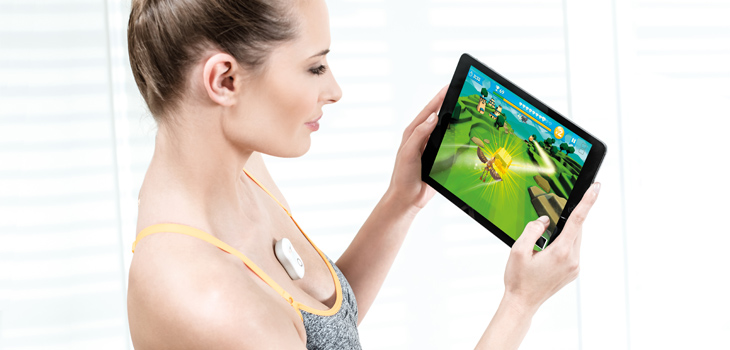
Dr. Lünenburger commented to OTW, “The seed of this project results from Zurich being a hot spot for bringing together health and technology. There is a long-standing collaboration of ETH, Balgrist and Hocoma (Hocoma is a spin-off of Balgrist Hospital). Hocoma developed Valedo as the first personal digital back coach for guided exercising of the lower back. Prof. Walter Karlen has extensively worked in the mHealth domain with projects ranging from sleep monitoring to diagnosis of infectious diseases. These projects have all had personalization of monitoring and treatment in the foreground. Starting a collaboration and bringing mobile health and biomechanical sensor technology together was a natural thing to do.”
“The close location of ETH Zurich, the University of Zurich and linked hospitals (University Hospital Zurich, Balgrist University Hospital, and others) in combination with the liberal environment of Switzerland have provided an ideal ground for scientific collaborations in health technologies, and the translation of this research into commercial products and services.”
“Orthopedic surgeons know well that physiotherapy, behavioral change and a fitness-aware lifestyle are important factors for successful low back pain therapy and complement surgical approaches. It is important to know that modern technology can further enhance these factors by providing them in a more personal, direct and mobile form—like smartphones.”
“The project received four-year funding from the Swiss National Science Foundation. We are working on complementing this funding with other sources in order to cover additional aspects—especially given the large number of participants the project will bring together using its apps and websites.”
“We will use artificial intelligence to track changes and provide expert support where needed. The intervention studies in the later phase of the project will follow established ethical principles and are monitored by expert clinicians.”
React:
Discussion
This is a fascinating development. In my practice we've seen similar outcomes with the revised protocol. The key differentiator seems to be patient selection criteria. Has anyone else noticed the correlation with BMI thresholds?
Great point. I'd push back slightly on the conclusion, the sample size in the cited study is too small to draw population-level inferences. That said, the directional signal is compelling and worth a larger RCT.
We implemented a similar approach last year. Early results are promising but we're still gathering 12-month follow-up data. Happy to share our protocol if anyone is interested.
Join the conversation
Orthopedic professionals are discussing this. Sign in and upgrade to read every comment and add your voice.