
Richard Laherty, M.D., of Queensland Neurosurgery & Spine Surgery, performed the first viscoelastic Freedom cervical case in Australia this November. He inserted the disc in a 47-year-old male patient who was suffering from degenerative disc disease with radiculopathy, as a result of degenerative cervical discs at levels C5-7. The patient had failed conservative treatments prior to undergoing surgery.
First AxioMed Viscoelastic Disc Inserted in Australian Patient
1 min read Premium comments
Secondary
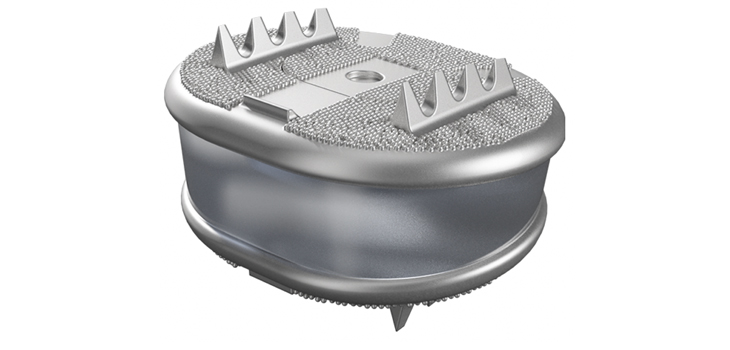
According to the manufacturer, the AxioMed LLC’s viscoelastic disc is a next-generation disc replacement that restores natural disc height, lordosis, stability, and motion in the human spine. In November the Therapeutic Goods Administration of Australia approved the sale and promotion of AxioMed’s viscoelastic cervical and lumbar Freedom total disc replacements.
Following the surgery Laherty said, “The Freedom Cervical Disc is extremely easy to implant and has a great anatomical fit for restoring disc height and lordosis in the cervical spines of my patients. I am excited to have this viscoelastic technology that mimics the natural motion of a healthy human disc, and to make this solution available to my patients. It will provide a faster surgical recovery time.”
AxioMed CEO Kingsley Chin, M.D., said, “With the addition of the lateral lumbar technique, we expect AxioMed to be the worldwide leader in disc replacement surgery.”
Author
React:
Discussion
This is a fascinating development. In my practice we've seen similar outcomes with the revised protocol. The key differentiator seems to be patient selection criteria. Has anyone else noticed the correlation with BMI thresholds?
Great point. I'd push back slightly on the conclusion, the sample size in the cited study is too small to draw population-level inferences. That said, the directional signal is compelling and worth a larger RCT.
We implemented a similar approach last year. Early results are promising but we're still gathering 12-month follow-up data. Happy to share our protocol if anyone is interested.
Join the conversation
Orthopedic professionals are discussing this. Sign in and upgrade to read every comment and add your voice.