
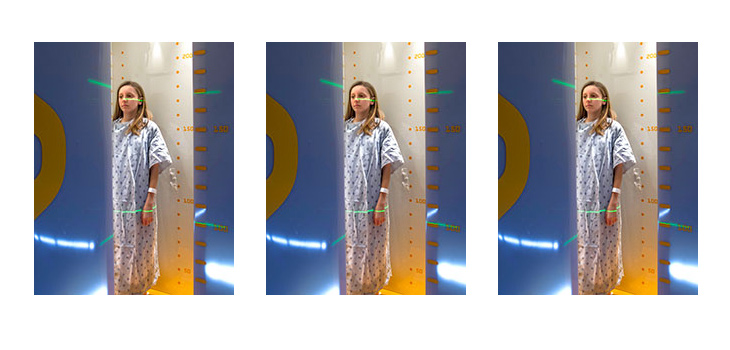
Millions of patients in South Korea will now have access to high-level radiography. EOS imaging has recently announced the official opening of the first EOS site in South Korea, located at the Konyang University Hospital. The University Hospital serves an adult and pediatric population of 7 million outpatients and 25 million inpatients on average per year.
EOS imaging: First Site in South Korea
2 min read Premium comments
Secondary
Professor Kim Sang Beom, Chief of the Spine Centre and Orthopedics Department and Board Member of the Korea Spine Surgeon Association, commented in the November 28, 2016 news release, “EOS is a real innovative technology with low dose biplanar 2D/3D radiography that’s approved by NECA [National Evidence-based healthcare Collaborating Agency]. We are happy to be able to extend our services and care to our patients with this technology, including beginning to screen children and students utilizing the applicable Micro Dose option. The Konyang University Hospital uses the most advanced technology for better patient outcome. EOS will be the gold standard for musculoskeletal treatment in the near future.”
Marie Meynadier, Ph.D., CEO of EOS imaging, commented, “The Konyang University Hospital will be a strong reference center for the EOS platform in South Korea. Together with the Innovative Technology status obtained from the NECA Center for New Health Technology earlier this year, this will fuel adoption in the important South Korean market. We look forward to serving more Korean hospitals, healthcare professionals and patients with our low dose 2D/3D technology.”
Professor Kim Sang Beom told OTW, “This EOS technology will open a new way to understand my patients using an extended view and innovative thinking. We can see all information of patients with anteroposterior (AP)/lateral global images. And the 3D Reconstruction is very impressive because I finally can understand my patients with real information and previously unknown facts. The ultra low dose of radiation is a beautiful gift.”
“We are going to make this the Korean standard for scoliosis and deep research for 3D spine, hip, knee with weight bearing positions. It would be the first study in Korea using the EOS technology.”
“Konyang University hospital will take a leadership role in the study of EOS. I am going to form an EOS study group with people who have significant interest in this technology; the group will consist of orthopedic surgeons, radiologists, neurosurgeons, and rehabilitation doctors. I anticipate that EOS imaging will collaborate on the group as well.”
React:
Discussion
This is a fascinating development. In my practice we've seen similar outcomes with the revised protocol. The key differentiator seems to be patient selection criteria. Has anyone else noticed the correlation with BMI thresholds?
Great point. I'd push back slightly on the conclusion, the sample size in the cited study is too small to draw population-level inferences. That said, the directional signal is compelling and worth a larger RCT.
We implemented a similar approach last year. Early results are promising but we're still gathering 12-month follow-up data. Happy to share our protocol if anyone is interested.
Join the conversation
Orthopedic professionals are discussing this. Sign in and upgrade to read every comment and add your voice.