
The American Academy of Orthotists and Prosthetists (the Academy) is pouring $210, 000 into orthotic and prosthetic (O&P) research initiatives with the goal of enhancing patient care. Their other goal is to help practitioners to increase insurance reimbursements.
AAOP Invests $210, 000 in Orthotic, Prosthetic Research
1 min read Premium comments
Secondary
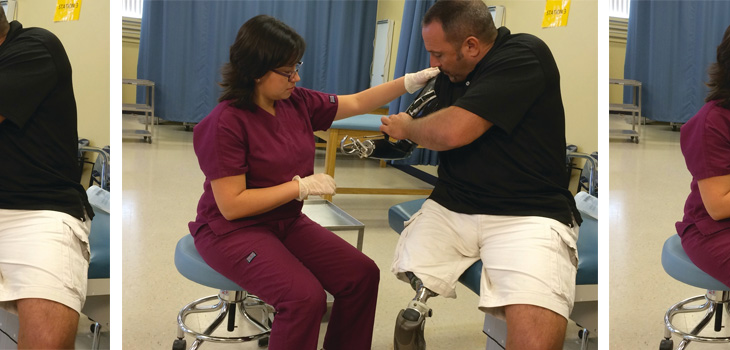
As indicated in the November 17, 2016 news release, “The Academy dove into its first research initiative last month by convening a State-of-the-Science Conference in Florida on ‘Body Powered Versus Myoelectric Upper Extremity Prostheses.’ A variety of subject matter experts convened for two days to discuss the topic.”
“Currently, there is insufficient evidence regarding the functional differences in upper-limb prostheses, ” said M. Jason Highsmith, PT, DPT, PhD, CP, FAAOP, chair of the research council and immediate past president of the Academy. “This State-of-the-Science Conference will help to inform upper-limb prosthesis selection and design to ensure that patients experience the best functional benefit for their specific needs.”
The Academy plans another conference to discuss the “Economics of Transtibial Prostheses”. In addition, they will undertake a broader systematic review on “Outcome Measures for Persons Post-Stroke Who Utilize Orthoses.” Also, research funding from the Academy will evaluate “Metabolic Expenditure on Transtibial Prosthetic Users.”
Academy President Rick Miller, CO, FAAOP, is excited about the opportunities that will result from these research initiatives. “The Academy is making a significant investment in the future of O&P clinical care. I am thrilled that we are taking a leading role in developing research opportunities across such a broad range of focus areas.”
Academy Treasurer Kate Allyn, CPO/L, FAAOP told OTW, “I think it would be important for orthopedic surgeons to know that there is evidence based practice to support specific protocols related to prosthetic and orthotic clinical practice. For example, to provide published data on prosthetic techniques, component selection, residual limb health, and rehabilitation after an amputation would clearly provide orthopedic surgeons quality assurance for their patients care. Many clinicians from a multi-disciplinary team appreciate evidence based on real results and strategically collected data.”
“Past Academy evidence based research initiatives of interest to orthopedic surgeons also include Postoperative Management of the Lower Extremity Amputation and The Biomechanics of Ambulation After Partial Foot Amputation.”
Author
React:
Discussion
This is a fascinating development. In my practice we've seen similar outcomes with the revised protocol. The key differentiator seems to be patient selection criteria. Has anyone else noticed the correlation with BMI thresholds?
Great point. I'd push back slightly on the conclusion, the sample size in the cited study is too small to draw population-level inferences. That said, the directional signal is compelling and worth a larger RCT.
We implemented a similar approach last year. Early results are promising but we're still gathering 12-month follow-up data. Happy to share our protocol if anyone is interested.
Join the conversation
Orthopedic professionals are discussing this. Sign in and upgrade to read every comment and add your voice.