
DePuy Synthes Spine has a new ALIF (anterior lumbar interbody fusion) implant designed for “surgical efficiency.”
Surgical Efficiency Highlights DePuy Synthes New ALIF Implant System
1 min read Premium comments
Secondary
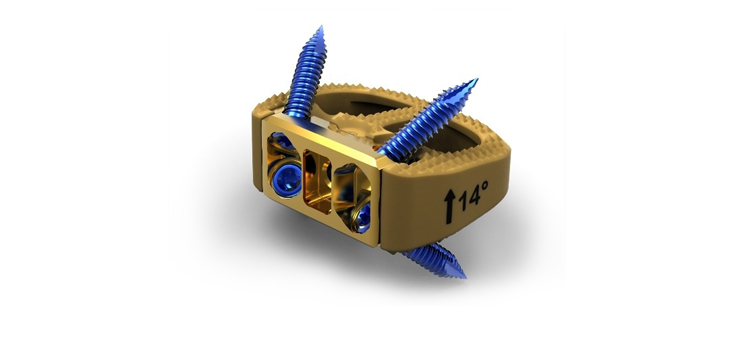
On October 27, 2016, the company announced the launch of the Synfix Evolution System. The system, according to the company, is stand-alone and provides biomechanical stability to promote fusion and restore function. The system offers a broad range of implant options to accommodate various patient anatomies.
The system consists of a PEEK spacer coupled with a titanium zero-profile plate and four divergent locking screws, which create a wedge of bone that helps anchor the implant during the healing process.
Stand-alone ALIF procedures are growing at a rate of 3% each year due to reduced complication rates associated with fusion surgery through the patient’s back. The company claims multiple studies of the Synfix Evolution technology show that it provides “superior biomechanical stability compared to other stand-alone ALIF implants and equivalent biomechanical stability relative to lumbar fusion performed through the back.”
But of interest to hospitals and surgical centers is that the Synfix system increases surgical efficiency by reducing the number of instruments and increasing screw insertion speed. The company says the design team engineered an innovative thread lock sleeve to capture the screw to the screwdriver, preventing the screw from becoming disengaged during surgery.
“Biomechanical stability in an implant is paramount, ” said Alexandre Rasouli, M.D., Cedars-Sinai Medical Center. “It is the difference between a single stage surgery and a more involved multi-stage surgery that can increase complications and drive up costs.”
Dan Wildman, Platform Leader, DePuy Synthes Spine, said the launch of the Synfix Evolution system shows that the company, “continue[s] to respond to our customers by developing a product that is easy to use while helping improve operating room efficiency.”
Author
React:
Discussion
This is a fascinating development. In my practice we've seen similar outcomes with the revised protocol. The key differentiator seems to be patient selection criteria. Has anyone else noticed the correlation with BMI thresholds?
Great point. I'd push back slightly on the conclusion, the sample size in the cited study is too small to draw population-level inferences. That said, the directional signal is compelling and worth a larger RCT.
We implemented a similar approach last year. Early results are promising but we're still gathering 12-month follow-up data. Happy to share our protocol if anyone is interested.
Join the conversation
Orthopedic professionals are discussing this. Sign in and upgrade to read every comment and add your voice.