
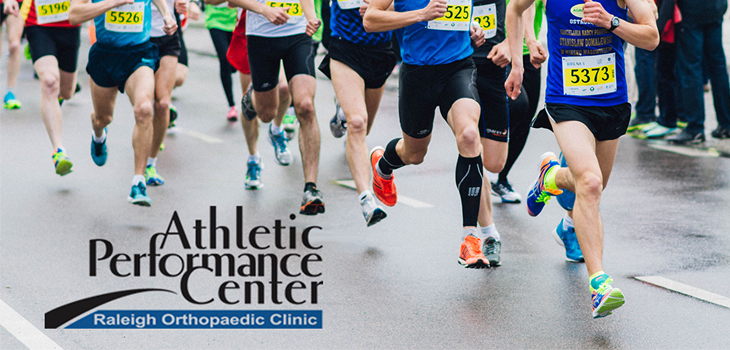
It wasn’t an electoral race, but a road race where Raleigh Orthopaedic Clinic recently lent a hand. The clinic participated in the Raleigh City of Oaks Marathon by hosting an injury recovery seminar and health education booth on November 4. Physical therapists from EXOS at Raleigh Orthopaedic presented a seminar called “Recovery Strategies.”
Raleigh Orthopaedic Clinic Participates in Marathon
1 min read Premium comments
Secondary
In addition to the seminar, Raleigh Orthopaedic specialists hosted a booth providing information on injury recovery strategies, performance nutrition and physical therapy, as well as free injury screenings. Participants were able to enter a drawing to win free sessions with EXOS for Raleigh Orthopaedic’s registered dietitian and Rally program sessions, which are designed to transform your body through performance training, nutrition consultation and education on maintaining a healthy lifestyle.
Greg Saxton, Director of Therapy and Ancillary Services at Raleigh Orthopaedic Clinic, told OTW, “This was an opportunity to educate the Triangle’s active population on the most effective recovery options, as well as promote health and wellness in the running community. Raleigh Orthopaedic is dedicated to helping others live a healthy and active lifestyle, and this is the perfect opportunity to help our community avoid injuries that might impact their quality of life.”
“Our goal was to promote health and wellness in the running community. We wanted to educate participants about the different options available to assist with their overall performance.”
“Our physical therapist spoke about dry needling as it relates to recovery for the athletes after their race and will also provide a demo. then our performance dietitian spoke about nutrition for recovery. Both topics are extremely important pieces to a runner’s overall program.”
Author
React:
Discussion
This is a fascinating development. In my practice we've seen similar outcomes with the revised protocol. The key differentiator seems to be patient selection criteria. Has anyone else noticed the correlation with BMI thresholds?
Great point. I'd push back slightly on the conclusion, the sample size in the cited study is too small to draw population-level inferences. That said, the directional signal is compelling and worth a larger RCT.
We implemented a similar approach last year. Early results are promising but we're still gathering 12-month follow-up data. Happy to share our protocol if anyone is interested.
Join the conversation
Orthopedic professionals are discussing this. Sign in and upgrade to read every comment and add your voice.