
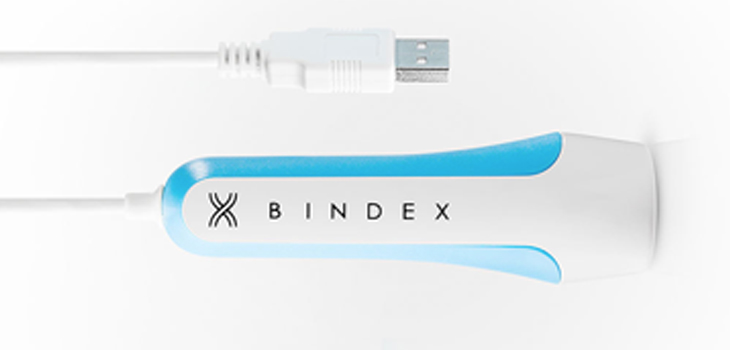
Move over cell phone…there is another portable device that may want to share that space—the world’s first pocket-sized diagnostic device for osteoporosis. Bone Index Ltd., a company based in Finland, has been granted a U.S. patent for its unique product, known as Bindex.
Patent for FIRST Pocket-Sized Osteoporosis Diagnostic Device
2 min read Premium comments
Secondary
Bone Index’s CEO, Dr. Ossi Riekkinen said in the November 11, 2016 news release, “Bindex is unique technology. Now we have a total of 19 patents globally including the U.S., China, Japan and large European countries. The United States is a very significant market and we are actively seeking a partner who has the capabilities to take advantage of this unique opportunity. The overall aim is to prevent osteoporotic fractures and improve the quality of life of families in the U.S.”
Dr. Riekkinen told OTW, “Bindex is the first reliable, fast and easy to use point-of-care instrument for osteoporosis diagnostics. We have received 510(k) clearance from FDA for the Bindex to help in osteoporosis diagnosis.”
“Bindex measures the cortical bone thickness of the tibia and the algorithm calculates the Density Index, a parameter which estimates bone mineral density at the hip as measured with DXA [dual-energy X-ray absorptiometry]. Bindex detects osteoporosis with 90% sensitivity and specificity and will significantly help physicians with diagnosis.”
“At the moment, Bindex is compared to DXA with totally about 2, 500 patients in U.S., Finland, Netherlands, Italy and Spain. For example, in Netherlands Bindex is investigated with fracture patients who normally are investigated with DXA. The idea is to improve the treatment pathway of fracture patients a with cost effective way. In Finland, we have already done a cost effectiveness study and the results are impressive.”
“At the American Society for Bone and Mineral Research conference this year there was excellent scientific presentation with very good results, given by Dr. Hannu Aro, professor of Orthopaedic Surgery at Turku University Hospital, Finland, how Bindex can be used as an office-based screening method before hip arthroplasty operation. In addition, Bindex may be suitable also for osteoporosis measurement in acute hip fracture cases prior surgery in an emergency room environment.”
“Osteoporosis is a highly underdiagnosed disease and the number of patients is very high. With hospital-based technology, DXA, it is very difficult to handle this huge number of patients. Reliable point-of-care technology is a great answer to this clinical challenge.”
“However, we receive enquiries from new application areas continuously. For example, neurosurgeries are highly interested about Bindex. They thought that as a point-of-care measurement the planning of operations will be more accurate and the risk patients can be screened earlier and with this way the success of operations might improve significantly.”
React:
Discussion
This is a fascinating development. In my practice we've seen similar outcomes with the revised protocol. The key differentiator seems to be patient selection criteria. Has anyone else noticed the correlation with BMI thresholds?
Great point. I'd push back slightly on the conclusion, the sample size in the cited study is too small to draw population-level inferences. That said, the directional signal is compelling and worth a larger RCT.
We implemented a similar approach last year. Early results are promising but we're still gathering 12-month follow-up data. Happy to share our protocol if anyone is interested.
Join the conversation
Orthopedic professionals are discussing this. Sign in and upgrade to read every comment and add your voice.