
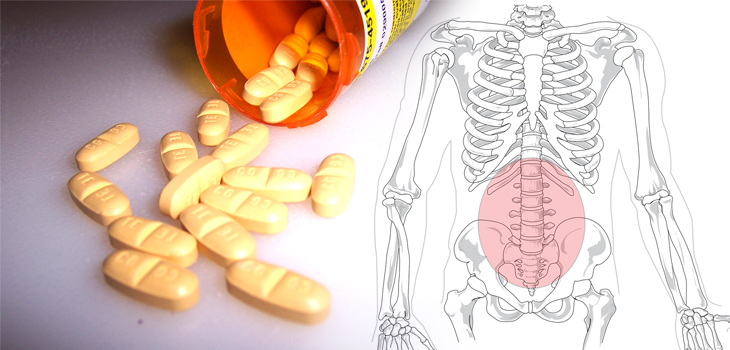
All those opioids and not so much relief, says a new study from Rush University involving 2, 030 patients with back pain. The study also found that many of these people worry about side effects and the stigma associated with taking these medications.
Opioids for Back Pain: Limited Relief, Concern About Stigma
2 min read Premium comments
Secondary
“Patients are increasingly aware that opioids are problematic, but don’t know there are alternative treatment options, ” said Asokumar Buvanendran, M.D., lead author of the study, director of orthopedic anesthesia and vice chair for research at Rush University, Chicago, and vice chair of the American Society of Anesthesiologists (ASA) Committee on Pain Medicine, in the October 23, 2016 news release. “While some patients may benefit from opioids for severe pain for a few days after an injury, physicians need to wean their patients off them and use multi-modal therapies instead.”
According to the research, nearly half of those surveyed (941) were currently taking opioids. When asked how successful the opioids were at relieving their pain, only 13% said ‘very successful.’ The most common answer—given by 44%—was “somewhat successful” and 31% said ‘moderately successful;’ 12% said ‘not successful.’”
As stated in the news release, “Seventy-five said they experienced side effects including constipation (65 percent), sleepiness (37 percent), cognitive issues (32 percent) and dependence (29 percent). Respondents also had concerns about the stigma associated with taking opioids. Forty-one percent said they felt judged by using opioids. While 68 percent of the patients had also been treated with antidepressants, only 19 percent felt a stigma from using those.”
“Patients with chronic low back pain, persistent pain lasting more than three months, should see a pain medicine specialist who uses an approach that combines a variety of treatments that may be more beneficial, ” said Dr. Buvanendran. “These treatments include physical therapy, bracing, interventional procedures such as nerve blocks, nerve ablation techniques or implantable devices, other medications such as anti-inflammatories and alternative therapies such as biofeedback and massage.”
Dr. Buvanendran told OTW, “There are many advancements in orthopedic surgery, anesthesia and pain control keeping pace with it. It is interesting to see that we have the ability to achieve great success when all parties work together…when you work as a team and involve anesthesia and pain management.”
Author
React:
Discussion
This is a fascinating development. In my practice we've seen similar outcomes with the revised protocol. The key differentiator seems to be patient selection criteria. Has anyone else noticed the correlation with BMI thresholds?
Great point. I'd push back slightly on the conclusion, the sample size in the cited study is too small to draw population-level inferences. That said, the directional signal is compelling and worth a larger RCT.
We implemented a similar approach last year. Early results are promising but we're still gathering 12-month follow-up data. Happy to share our protocol if anyone is interested.
Join the conversation
Orthopedic professionals are discussing this. Sign in and upgrade to read every comment and add your voice.