
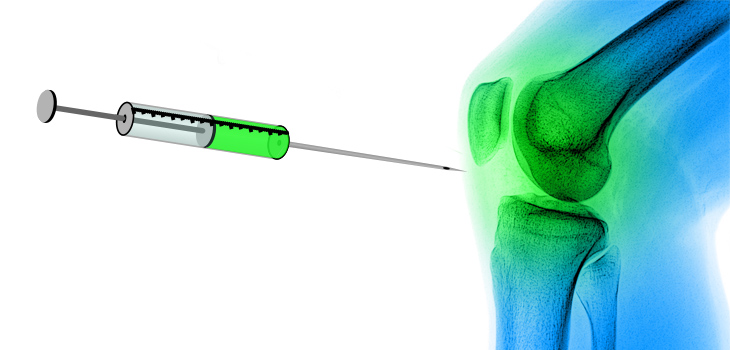
A multicenter study has given a voice to patients undergoing prolotherapy for knee osteoarthritis (OA). Prolotherapy, an injection of hypertonic dextrose in and around the affected knee joint, was associated with improved knee-specific symptoms, quality of life, and ability to participate in daily activities among the majority of individuals who participated in several small clinical studies. The results are featured in an article in The Journal of Alternative and Complementary Medicine, a peer-reviewed publication from Mary Ann Liebert, Inc., publishers. The article is available free on The Journal of Alternative and Complementary Medicine website until November 28, 2016.
Knee OA Symptoms Improve After Prolotherapy
1 min read Premium comments
Secondary
According to the October 24, 2016 news release, David Rabago, M.D. and co-authors from University of Wisconsin School of Medicine and Public Health, University of Chicago Hospitals, Unity Point Health-Meriter, McKee Clinic-Family Medicine, and University of Wisconsin-Madison, and University of Minnesota Medical School, identified a subgroup of individuals who had improved knee function without decreased pain.
Dr. Rabago told OTW, “Prolotherapy now has strong evidence that it improves symptoms of knee osteoarthritis in randomized control trial [RCT] and meta-analysis studies. Missing from the literature is the patients’ voice regarding outcomes after prolotherapy. Hence the current study.”
“Prolotherapy is a non-surgical therapy supported by RCT and meta-analysis data reporting that Prolotherapy improves knee symptoms and may be disease modifying for osteoarthritis. Prolotherapy improves knee related symptoms and overall knee related quality of life in knee osteoarthritis. Given that prolotherapy safely improves knee symptoms, it is reasonable to treat patients with this safe, conservative therapy prior to total knee arthroplasty as part of routine care for knee osteoarthritis.”
React:
Discussion
This is a fascinating development. In my practice we've seen similar outcomes with the revised protocol. The key differentiator seems to be patient selection criteria. Has anyone else noticed the correlation with BMI thresholds?
Great point. I'd push back slightly on the conclusion, the sample size in the cited study is too small to draw population-level inferences. That said, the directional signal is compelling and worth a larger RCT.
We implemented a similar approach last year. Early results are promising but we're still gathering 12-month follow-up data. Happy to share our protocol if anyone is interested.
Join the conversation
Orthopedic professionals are discussing this. Sign in and upgrade to read every comment and add your voice.