
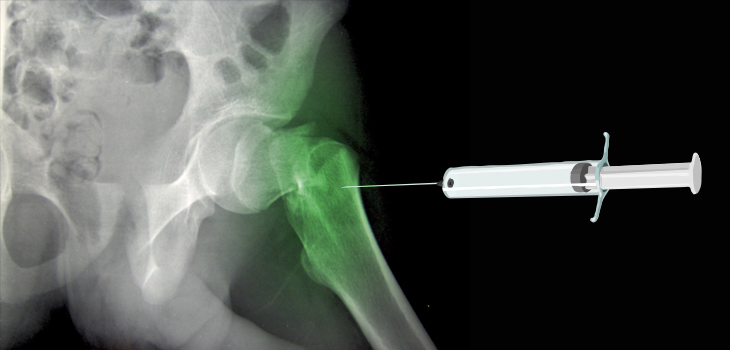
New research from Sweden indicates that teriparatide, an existing medication, can help patients get back on their feet quicker following a hip fracture. The study was published in the November 16, 2016 edition of The Journal of Bone and Joint Surgery.
Established Drug Can Get You Going Faster Post-Hip Fracture
2 min read Premium comments
Secondary
“We have shown that patients are more mobile and suffer less pain after a hip fracture when they receive this treatment, ” says Per Aspenberg, in the November 21, 2016 news release. Dr. Aspenberg is professor of orthopedics at Linköping University in Sweden, and first author of the study.
As indicated in the news release, “The drug tested by the researchers, teriparatide, is based on a naturally occurring hormone, parathyroid hormone (PTH). Teriparatide is the active ingredient in human PTH and is currently used to treat osteoporosis. The hormone influences bone structure.”

" data-large-file="https://i0.wp.com/ryortho.com/wp-content/uploads/2016/11/Established_DrAspenberg_WEB.jpg?fit=220%2C300&ssl=1" src="https://i0.wp.com/ryortho.com/wp-content/uploads/2016/11/Established_DrAspenberg_WEB.jpg?resize=218%2C297&ssl=1" alt="Per Aspenberg, Professor emeritus at Linköping University, Sweden / Courtesy of Thor Balkhed/LiU" width="218" height="297">Per Aspenberg, Professor emeritus at Linköping University, Sweden / Courtesy of Thor Balkhed/LiU
“Bones contain both cells that break down bone and cells that create new bone. This hormone stimulates both types, but it has a greater effect on the cells that create new bone, and the skeleton is thus made stronger. Previous work by my research group in animals has shown that the beneficial effect of the hormone is much stronger during the healing of broken bones than it is for the skeleton in general, such as when it is used to treat osteoporosis, ” said Dr. Aspenberg.
The study looked at 171 patients with a fracture in the transition between the neck of the femur and its body, known as a pertrochanteric fracture. The patients were assigned at random to one of two groups: those who received teriparatide after the surgery, and those who received another drug commonly used to treat osteoporosis. Neither the patients nor the personnel who administered the tests knew which treatment a particular patient received. The patients carried out a test in which they rose from a chair, walked three metres, turned round, walked back and sat down again. The investigators timed the patients as they carried out the test. Those who received teriparatide moved more rapidly than those in the other group in the months following the surgery. They also estimated the pain they experienced when carrying out the test to be lower.
“It’s my conclusion that this study shows clearly that treatment with PTH accelerates the healing process of fractures in such a manner that patients benefit from it. They are able to function better after six weeks and after three months. This is the first time that this has been shown in a scientifically convincing manner, ” says Dr. Aspenberg.
Dr. Aspenberg told OTW, “It has been speculated for a long time that fracture healing might be accelerated with PTH or teriparatide. Now it has finally been shown. Moreover, the effect is of a clinically important magnitude. It was interesting to find that the positive effect on mobility lasted so many months.”
React:
Discussion
This is a fascinating development. In my practice we've seen similar outcomes with the revised protocol. The key differentiator seems to be patient selection criteria. Has anyone else noticed the correlation with BMI thresholds?
Great point. I'd push back slightly on the conclusion, the sample size in the cited study is too small to draw population-level inferences. That said, the directional signal is compelling and worth a larger RCT.
We implemented a similar approach last year. Early results are promising but we're still gathering 12-month follow-up data. Happy to share our protocol if anyone is interested.
Join the conversation
Orthopedic professionals are discussing this. Sign in and upgrade to read every comment and add your voice.