
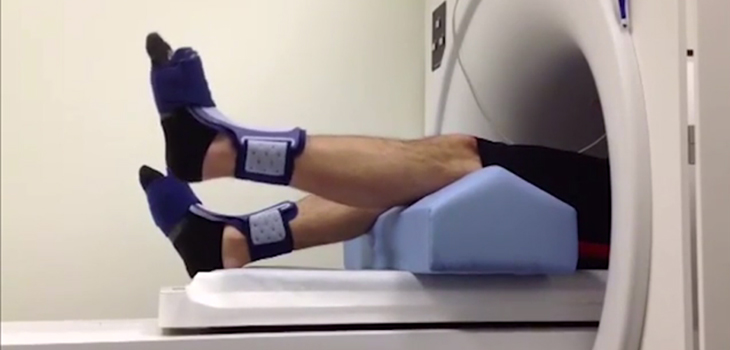
Who knew? It looks like the brain actually needs retraining following an anterior cruciate ligament (ACL) injury! Researchers from The Ohio State University Wexner Medical Center have found that, according to the November 4, 2016 news release, “…parts of the brain associated with leg movement lagged during recovery from an ACL injury. Through comparing brain scans, researchers could see the differences in brain activity in healthy adults, versus those recovering from ACL injuries, when extending and flexing the knee.”
Brain Needs Retraining After ACL Injury
2 min read Premium comments
Secondary
“The brain fundamentally changed in how it processes information from an injured knee, ” said Dustin Grooms, Ph.D., a researcher who conducted the study at Ohio State and is currently employed at Ohio University. “We think those changes play a big role in why people who recover from ACL injuries don’t trust their knees entirely and tend to move them differently.”
The researchers found that these patients did not rely on movement or spatial awareness, but instead on visual systems in their brains. To rectify this situation, researchers are using strobe glasses to include motor learning and visual-motor compensations in rehabilitation.
“The idea is to use these glasses to visually distract these patients, so their brains will rewire back to their original state, ” said Dr. Grooms. “That will allow them to once again move their knee based on natural instinct instead of relying on visual cues.”
Jimmy Onate, Ph.D., a health and rehabilitative sciences researcher at Ohio State Wexner Medical Center, told OTW, “Orthopedic surgeons should be informed about the neurological and biomechanical interconnection following ACL surgery. Orthopedic rehabilitation needs to integrate multisensory neurological principles to provide patients with a holistic approach following ACLR. Visual interference training along with other motor learning paradigms should be incorporated throughout the rehabilitation process.”
“Our most surprising finding was the extent the visual system was activated in a simple movement task in ACLR individuals. We hypothesized this might occur but the extent of the reliance on visual systems during this simple knee flexion-extension was still surprising to learn.”
“This is some of the initial foundational work to identify brain processing differences post ACLR. Many of the other analyses completed infer neuromotor differences following ACL injury, but this study utilized a more in depth direct analysis of brain function during movement to reflect neuromotor differences in ACLR injured individuals. The impact of these findings will make early and late changes to ACL rehabilitation processes through the use of visual interference to hopefully up regulate sensory motor systems to aid individuals in overcoming their deficits. We are looking forward to future randomized controlled trials on neuromotor sensory integration paradigms to be impactful on ACL rehabilitation and re-injury outcomes.”
Author
React:
Discussion
This is a fascinating development. In my practice we've seen similar outcomes with the revised protocol. The key differentiator seems to be patient selection criteria. Has anyone else noticed the correlation with BMI thresholds?
Great point. I'd push back slightly on the conclusion, the sample size in the cited study is too small to draw population-level inferences. That said, the directional signal is compelling and worth a larger RCT.
We implemented a similar approach last year. Early results are promising but we're still gathering 12-month follow-up data. Happy to share our protocol if anyone is interested.
Join the conversation
Orthopedic professionals are discussing this. Sign in and upgrade to read every comment and add your voice.