
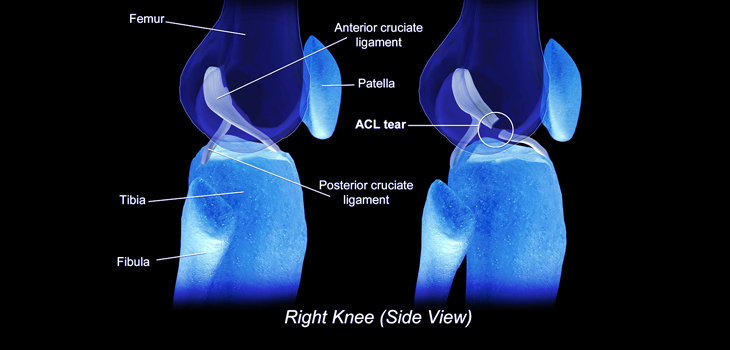
Researchers who had previously found that younger age is a risk factor for a second anterior cruciate ligament (ACL) injury have expanded on their work. Kate E. Webster, Ph.D. is with the School of Allied Health at La Trobe University in Australia. Dr. Webster, lead author on the study, commented to OTW, “For this new study, our goals were to establish the rates of graft rupture and determine the influence of sex and age on the risk of subsequent ACL injury. To that end, we examined data from 354 consecutive patients who were younger than 20 years when they underwent their first primary hamstring tendon autograft ACL reconstruction.”
1 in 3 Undergoing ACL Surgery Before 20 Will Reinjure!
2 min read Premium comments
Secondary
“We found that early graft ruptures were more prevalent in individuals who had surgery when they were younger than 18 years versus those in the 18- to 19-year age group. Males had higher rates of graft rupture than did females; the youngest males (
“The take home message from this study is that in a large cohort of younger patients one in three who had ACL reconstruction surgery before they were 20 years of age went on to have a second ACL injury. This included injury to either the reconstructed knee or the previously healthy contralateral knee.”
“That a third of younger patients have a second ACL injury is a pretty scary and eye opening statistic. This is a significant concern from both sport participation and injury prevention perspectives, as well as for long-term knee health. This study confirmed the high second ACL injury rates in younger patients in one of the largest consecutive cohorts to date.”
“Our data show high second injury rates with the use of hamstring tendon autografts in younger patients. Quadriceps tendon has been used in small numbers with promising results and may be a suitable alternative to both hamstring and patellar tendon grafts in younger patients. At OrthoSport Victoria we have begun a comparative cohort study to compare outcomes between quadriceps and hamstring tendon grafts in younger patients.”
“The development and validation of return to sport criteria is another area that we are interested in and the results of our study demonstrate a clear need for this so that all patients, including younger ones, can resume sport effectively and safely.”
Author
React:
Discussion
This is a fascinating development. In my practice we've seen similar outcomes with the revised protocol. The key differentiator seems to be patient selection criteria. Has anyone else noticed the correlation with BMI thresholds?
Great point. I'd push back slightly on the conclusion, the sample size in the cited study is too small to draw population-level inferences. That said, the directional signal is compelling and worth a larger RCT.
We implemented a similar approach last year. Early results are promising but we're still gathering 12-month follow-up data. Happy to share our protocol if anyone is interested.
Join the conversation
Orthopedic professionals are discussing this. Sign in and upgrade to read every comment and add your voice.