
Under the bundling payment system for hips and knees, providers are given a lump sum for an entire episode of care, ending 90 days after a procedure is performed.
Zimmer Biomet Buys Tele-rehab Platform
2 min read Premium comments
Secondary
Studies have shown that the largest variable in the cost of that episode of care is in the post-surgical phase after patients leave the hospital. For example, according to Centers for Medicare and Medicaid Services (CMS), 36% of the total cost for lower extremity joint replacement is attributable to post-acute care. Assuring that patients follow rehab protocols saves the hospital money.
Device makers have been developing tools to help their hospital customers control those costs.
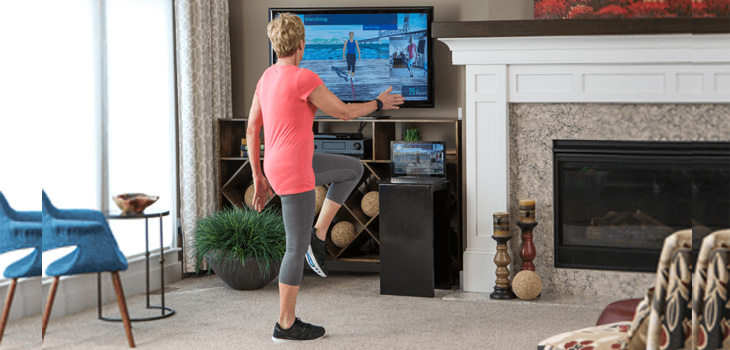
On October 27, 2016 Zimmer Biomet Holdings. Inc. announced the acquisition of RespondWell, a telerehabilitation technology designed to provide personalized, clinician-supervised post-surgical physical therapy in the comfort of a patient’s home. The Zimmer Biomet announcement stated the acquisition strengthens it recently announced Signature Solutions commercial offering by integrating a comprehensive, at-home telerehabilitation capability designed to “enhance patient compliance with physical therapy and improve the quality of recovery.”
A Zimmer Biomet spokesperson told OTW that the RespondWell program is known as Therapy@Home. Patients are guided by Maya, an on-screen virtual therapist helping to keep patients engaged, motivated and on track with their recovery program in the convenience of their home. It features a personalized rehabilitation plan designed by a clinical care team with on-screen digital instructors to coach and encourage patients, and built-in reward features encouraged by increased patient participation and consistency.
The system also allows patients’ clinical care teams to remotely monitor progress and activity and digitally communicate, potentially reducing the costs associated with follow-up visits and clinic-based rehabilitation programs.
David Nolan, Zimmer Biomet’s group president, Biologics, Extremities, Sports Medicine, Surgical, Trauma, Foot and Ankle and Office Based Technologies, said the new value-based reimbursement environment, “compels hospitals and providers to assume responsibility for patient outcomes well after discharge and through the critical rehabilitation period. Integrating an innovative and comprehensive telerehabilitation program into our Zimmer Biomet Signature Solutions offering addresses the emerging need for healthcare providers to oversee and optimize post-surgical recovery outcomes in order to maximize value across the entire episode of care.”
“I believe RespondWell’s innovative telerehabilitation platform will help our clinical care team enhance the quality and outcomes of post-op patient care by providing an interactive and motivating physical therapy experience that encourages patient engagement and compliance to physical therapy in a convenient environment, the patient’s home, ” said Ronald A. Navarro, M.D., regional coordinating chief of Orthopedic Surgery, Kaiser Permanente.
Author
React:
Discussion
This is a fascinating development. In my practice we've seen similar outcomes with the revised protocol. The key differentiator seems to be patient selection criteria. Has anyone else noticed the correlation with BMI thresholds?
Great point. I'd push back slightly on the conclusion, the sample size in the cited study is too small to draw population-level inferences. That said, the directional signal is compelling and worth a larger RCT.
We implemented a similar approach last year. Early results are promising but we're still gathering 12-month follow-up data. Happy to share our protocol if anyone is interested.
Join the conversation
Orthopedic professionals are discussing this. Sign in and upgrade to read every comment and add your voice.