
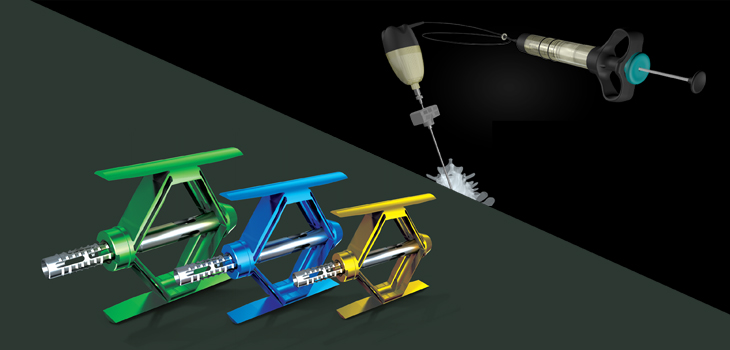
Vexim, a French company focused on the spine, has announced the receipt of regulatory approval from the Therapeutic Goods Administration (TGA) in order to commercialize SpineJack, as well as the cement delivery system Masterflow in Australia.
Vexim: Australian Approval for SpineJack, Masterflow
1 min read Premium comments
Secondary
As indicated in the September, 6 2016 news release, “This success opens a new market opportunity for VEXIM in Australia which represents a potential market of €30 million in the treatment of vertebral compression fractures according to VEXIM’s estimations.”
Vincent Gardès, Vexim’s CEO, stated, “This registration will enable us to have a substantial increase of our global activities. The company considers launching the exportation in Australia by the end of 2016.”
Asked what it was like to enter the Australian market, Gardès told OTW, “Australia is a mature market with strong growth rates. We have identified for a long time this market in our strategic planning activities. There aren’t currently any similar products in the market therefore there are great opportunities of development for Vexim and its product portfolio. We have successfully gone through the regulatory process and gained ARTG [Australian Register of Therapeutic Goods] certification for our products.”
As for plans over the next 6-12 months, he noted, “We still have steps to go before we market Spinejack as we are working on our reimbursement strategy for the private sector. There aren’t MBS (Medical Benefits Schedule) codes supporting reimbursement of such procedure. This situation currently limits the development of anatomic restoration of fractured vertebrae, whose prevalence is estimated to be more than 10, 000 per year in Australia. We are also actively evaluating potential distribution partners and look forward to starting with Spinejack in the public sector. We are thrilled to provide our innovative product Spinejack to Australian patients and surgeons.”
React:
Discussion
This is a fascinating development. In my practice we've seen similar outcomes with the revised protocol. The key differentiator seems to be patient selection criteria. Has anyone else noticed the correlation with BMI thresholds?
Great point. I'd push back slightly on the conclusion, the sample size in the cited study is too small to draw population-level inferences. That said, the directional signal is compelling and worth a larger RCT.
We implemented a similar approach last year. Early results are promising but we're still gathering 12-month follow-up data. Happy to share our protocol if anyone is interested.
Join the conversation
Orthopedic professionals are discussing this. Sign in and upgrade to read every comment and add your voice.