
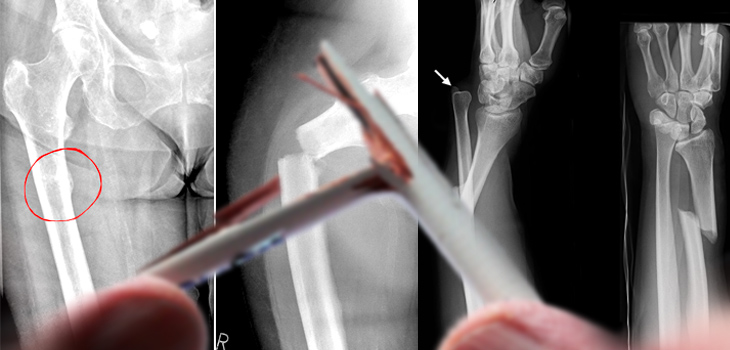
According to a new expert review from the International Osteoporosis Foundation, fracture risk is increased not just in those with type 1 diabetes (T1DM), but also in cases of type 2 diabetes (T2DM).
Types 1 and 2 Diabetes: Elevated Fracture Risk
2 min read Premium comments
Secondary
Professor Serge Ferrari is chair of the International Osteoporosis Foundation (IOF) Bone and Diabetes Working Group and professor at the Geneva University Hospital, Switzerland. He and colleagues determined, according to the October 3, 2016 news release, “In both types of diabetes, bone turnover is decreased and bone material properties and microstructure are altered, the latter particularly in the presence of microvascular complications. The reasons for the bone fragility in diabetes are complex and include: hyperglycemia, oxidative stress, and accumulation of AGEs [glycation end-products] compromising collagen properties; increased marrow adiposity, release of inflammatory factors and adipokines from visceral fat; and potentially alterations of osteocyte functions. Additionally, treatment-induced hypoglycemia, certain antidiabetic medications (such as thiazolidinediones) and propensity to fall, all contribute to increased fracture risk.”
“The longer the duration of the disease, the higher is the risk of diabetes complications, including bone health complications. Insulin-use has been specifically associated with an increased risk of fractures although it is not clear whether this is because insulin-use is a marker of the severity and/or longer duration of the disease or whether it is possibly due to the occurrence of hypoglycemic events that cause falls. Current evidence supports the use of both antiresorptive and anabolic agents like teriparatide in osteoporotic patients with diabetes, however there is no evidence so far that any osteoporosis drugs have anti-fracture efficacy in those diabetic patients with high fracture risk despite non-osteoporotic BMD levels.”
Professor Ferrari told OTW, “Patients with diabetes of long-standing duration have an up to two-fold and five-fold increase (types 2 and 1, respectively) in the risk of fragility fractures, particularly if requiring insulin and/or with microvascular complications. In this case fragility features should be considered as osteoporotic in nature even in the absence of low bone mineral density, since alterations in bone quality (microarchitecture and bone material more brittle) may be predominant.”
Asked about the most important guidelines to follow, Dr. Ferrari noted, “Good glycemic control (HbA1C <7%) is associated with lesser fracture risk. Adequate vitamin D levels, (supplements) particularly in obese subjects. Fall prevention is important, and use of osteoporosis drugs as appropriate (low bone mineral density, typical fragility fractures).”
“Fragility fractures are not yet recognised as a serious complication of disease in the diabetes community. Indeed an obese subject with diabetes breaking her humerus by falling from her chair would not be considered to have osteoporosis…yet she may.”
React:
Discussion
This is a fascinating development. In my practice we've seen similar outcomes with the revised protocol. The key differentiator seems to be patient selection criteria. Has anyone else noticed the correlation with BMI thresholds?
Great point. I'd push back slightly on the conclusion, the sample size in the cited study is too small to draw population-level inferences. That said, the directional signal is compelling and worth a larger RCT.
We implemented a similar approach last year. Early results are promising but we're still gathering 12-month follow-up data. Happy to share our protocol if anyone is interested.
Join the conversation
Orthopedic professionals are discussing this. Sign in and upgrade to read every comment and add your voice.