
Stryker Spine claims its new bone graft material delivery system is truly “advanced” and “simplified”.
Stryker’s New “Advanced and Simpler” Bone Graft Delivery System
1 min read Premium comments
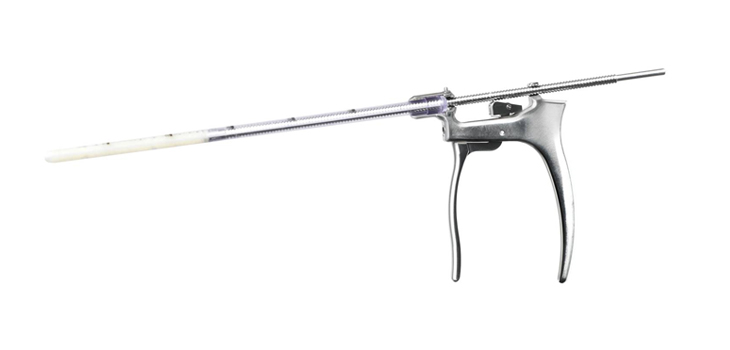
Secondary
On October 4, 2016, the company announced the launch of the hand-held LITe BIO Delivery System to deliver bone graft material to spinal surgery sites.
Bradley Paddock, president of Stryker’s Spine division, said conventional bone graft delivery methods can accommodate any type of graft material, but, they can be cumbersome to use. He added that pre-filled delivery devices are more streamlined but can only be used with specific graft materials.
He claims no other system combines all of the key features of the LITe Bio which is “truly advanced delivery, simplified.”
The company says the device simplifies the delivery of the graft, accommodates a surgeon’s preference of graft materials and allows for direct visualization of the graft placement.
The design of the system, says the company, lets surgeons use a single-handed method to deliver, “any type of autograft, allograft, or synthetic bone graft material without obstructing visibility.” The tool also provides, “tactile, visual, and audible confirmation of bone graft delivery, and the mallet-free system eliminates the impaction of bone graft.”
The patented system can be used for any type of spine fusion surgery, including minimally invasive procedures. The low-profile design, states the company announcement, allows visibility through a decompression tube without obstructing view. A radiolucent strip facilitates visualization under fluoroscopy, and the disposable cannula allows for delivery of up to 5cc of bone graft at one time.
Author
React:
Discussion
This is a fascinating development. In my practice we've seen similar outcomes with the revised protocol. The key differentiator seems to be patient selection criteria. Has anyone else noticed the correlation with BMI thresholds?
Great point. I'd push back slightly on the conclusion, the sample size in the cited study is too small to draw population-level inferences. That said, the directional signal is compelling and worth a larger RCT.
We implemented a similar approach last year. Early results are promising but we're still gathering 12-month follow-up data. Happy to share our protocol if anyone is interested.
Join the conversation
Orthopedic professionals are discussing this. Sign in and upgrade to read every comment and add your voice.