
Using a mouse model, researchers at Washington University School of Medicine in St. Louis have shown injecting nanoparticles into an injured joint can suppress inflammation immediately following an injury, thus reducing cartilage destruction.
Post-Injury Nanoparticles Suppress Inflammation!
1 min read Premium comments
Secondary
“I see a lot of patients with osteoarthritis, and there’s really no treatment, ” said senior author Christine Pham, M.D., an associate professor of medicine, in the September 26, 2016 news release. “We try to treat their symptoms, but even when we inject steroids into an arthritic joint, the drug only remains for up to a few hours, and then it’s cleared. These nanoparticles remain in the joint longer and help prevent cartilage degeneration.”
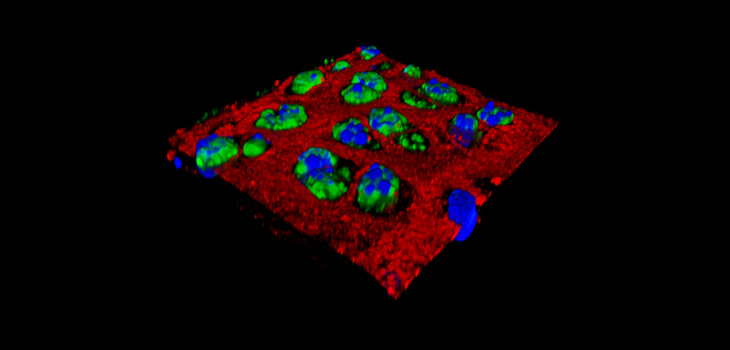
As indicated in the news release, “The nanoparticles used in the study are more than 10 times smaller than a red blood cell, which helps them penetrate deeply into tissues. The particles carry a peptide derived from a natural protein called melittin that has been modified to enable it to bind to a molecule called small interfering RNA (siRNA). The melittin delivers siRNA to the damaged joint, interfering with inflammation in cells.”
The peptide-based nanoparticle was designed by study co-investigators Hua Pan, Ph.D., an assistant professor of medicine, and Samuel Wickline, M.D., the James R. Hornsby Family Professor of Biomedical Sciences.
Dr. Pham told OTW, “Surgery following a joint injury (i.e., to repair torn meniscus/ligament) does not prevent PTOA [post traumatic osteoarthritis] but suppressing the early inflammatory response may preserve chondrocyte/cartilage viability and alter the course of PTOA. Other anti-inflammatory drugs exist but using siRNA we can target a specific pathway at a specific tissue site (such as the joint) thus sparing immuno-suppression elsewhere and preserving the host’s ability to fight infection. The nanoparticle can deeply penetrate cartilage, something that’s proven to be a challenge, and eventually can be delivered at point-of-care, i.e. the provider’s office.”
React:
Discussion
This is a fascinating development. In my practice we've seen similar outcomes with the revised protocol. The key differentiator seems to be patient selection criteria. Has anyone else noticed the correlation with BMI thresholds?
Great point. I'd push back slightly on the conclusion, the sample size in the cited study is too small to draw population-level inferences. That said, the directional signal is compelling and worth a larger RCT.
We implemented a similar approach last year. Early results are promising but we're still gathering 12-month follow-up data. Happy to share our protocol if anyone is interested.
Join the conversation
Orthopedic professionals are discussing this. Sign in and upgrade to read every comment and add your voice.