
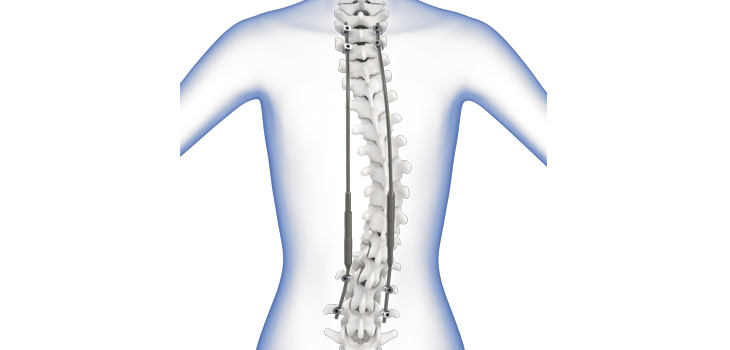
The spine gurus at NuVasive, Inc. have not only achieved a new 510(k), they have vastly improved the life of a six-year old girl. The company has just received FDA 510(k) clearance for its MAGEC system to be surgically implanted using its Reline posterior fixation system for treating patients with severe spinal deformity conditions. Sonia Garcia, a young lady with early onset scoliosis (EOS) and severe kyphosis, underwent urgent spinal deformity correction surgery with the MAGEC rod at Shriners Hospitals for Children—Los Angeles. Robert H. Cho, M.D., chief of staff and a pediatric orthopedic surgeon, was the surgeon.
NuVasive: 510(k) Clearance for MAGEC
2 min read Premium comments
Secondary
As indicated in the September 19, 2016 news release, “The Company’s MAGEC system is the only magnetically controlled growing-rod system cleared by the FDA for pediatric spinal deformity. MAGEC helps surgeons reduce the number of planned surgeries required to effectively treat patients with Early Onset Scoliosis (EOS). Supported by the versatility of the Reline system, NuVasive now offers surgeons a comprehensive solution for treating the most difficult spinal deformities.”
Dr. Cho said in the news release, “When I first met Sonia, she had a poor chance of surviving past her late teens. Because of her severe scoliosis, her quality of life was declining secondary to her lungs becoming collapsed and constricted by her progressive spinal curvature. Leveraging the versatility and reliability of Reline with the innovative MAGEC rod, we have significantly impacted Sonia’s life and minimized the number of surgeries she will require in the future. Immediately following her surgery, Sonia’s lung capacity increased by more than 30 percent, she reclaimed 10cm of height and her future is bright. This is why I do what I do, to help improve and change lives.”
Dr. Cho, M.D. told OTW, “The most exciting part of the MAGEC system is that I can now treat scoliosis in growing children with a minimal number of surgeries. The magnetic distraction technology allows me to periodically lengthen the implant and decrease the patient’s curvature in the office without any surgery and without any pain. In the past, I had to take children to the operating room to manually distract our growing rod constructs, giving them a risk of implant, wound, or anesthesia related complications each time at a rate of up to 24% with each lengthening (Bess et al. The Journal of Bone and Joint Surgery 2010). Performing the lengthenings in the office also decreases a patient’s anxiety about the operating room, as continued return trips to the operating room had significant negative psychosocial ramifications for my patients. In all, this has been an incredible solution for a very challenging disease in a vulnerable patient population.”
React:
Discussion
This is a fascinating development. In my practice we've seen similar outcomes with the revised protocol. The key differentiator seems to be patient selection criteria. Has anyone else noticed the correlation with BMI thresholds?
Great point. I'd push back slightly on the conclusion, the sample size in the cited study is too small to draw population-level inferences. That said, the directional signal is compelling and worth a larger RCT.
We implemented a similar approach last year. Early results are promising but we're still gathering 12-month follow-up data. Happy to share our protocol if anyone is interested.
Join the conversation
Orthopedic professionals are discussing this. Sign in and upgrade to read every comment and add your voice.