
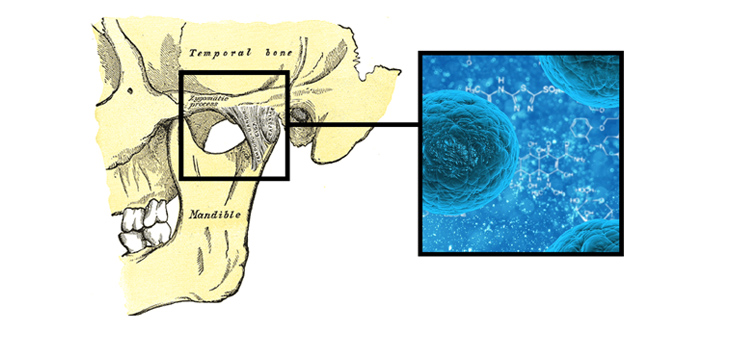
Columbia College of Dental Medicine researchers have found that stem cells in the temporomandibular joint (TMJ) can make new cartilage and repair joints.
Novel Stem Cells Make Cartilage and Repair Joints
2 min read Premium comments
Secondary
According to the October 10, 2016 news release, “When the stem cells were manipulated in animals with TMJ degeneration, the cells repaired cartilage in the joint. A single cell transplanted in a mouse spontaneously generated cartilage and bone and even began to form a bone marrow niche…” In a series of experiments described in the new report, Dr. Embree, Dr. Mao, and their colleagues isolated fibrocartilage stem cells (FCSCs) from the joint and showed that the cells can form cartilage and bone, both in the laboratory and when implanted into animals. “I didn’t have to add any reagents to the cells. They were programmed to do this.”
“This is very exciting for the field because patients who have problems with their jaws and TMJs are very limited in terms of clinical treatments available, ” said Mildred C. Embree, D.M.D., Ph.D., assistant professor of dental medicine at Columbia University Medical Center (CUMC) and the lead author of the study. Dr. Embree’s team, the TMJ Biology and Regenerative Medicine Lab, conducted the research with colleagues including Jeremy Mao, D.D.S., Ph.D., the Edwin S. Robinson Professor of Dentistry (in Orthopedic Surgery) at CUMC.
Dr. Embree told OTW, “I became interested in TMJ, cartilage and osteoarthritis studying as graduate student at the Craniofacial and Skeletal Diseases Branch at the National Institutes of Health. I became interested in the function of the fibrous tissue lining the surface of TMJ condyle. The idea that tissue specific stem/progenitor cells existed in musculoskeletal tissue was on the rise in the bone and dental field. When I started as assistant professor at Columbia University I decided to investigate stem cells in the TMJ fibrocartilage.”
“Our findings represent a minimally invasive approach to the treatment of damaged cartilage where resident stem cells are stimulated to repair diseased or injured tissue. Current treatment paradigms for patients with cartilage degeneration are evolving. The technique of locally injecting a therapeutic reagent to stimulate resident stem cells to repair cartilage could potentially bypass the necessity of surgery and total joint replacement. However extensive investigation is necessary prior to clinical applications, including affirmation that functional joint recovery is achieved.”
React:
Discussion
This is a fascinating development. In my practice we've seen similar outcomes with the revised protocol. The key differentiator seems to be patient selection criteria. Has anyone else noticed the correlation with BMI thresholds?
Great point. I'd push back slightly on the conclusion, the sample size in the cited study is too small to draw population-level inferences. That said, the directional signal is compelling and worth a larger RCT.
We implemented a similar approach last year. Early results are promising but we're still gathering 12-month follow-up data. Happy to share our protocol if anyone is interested.
Join the conversation
Orthopedic professionals are discussing this. Sign in and upgrade to read every comment and add your voice.