
RBC Capital Markets, a Canadian investment bank consistently ranked among the top 10 largest banks globally, released its 8th Annual Spine Surgeon Survey October 17, 2016. The survey included 51 U.S. spinal surgeons. The practice of spine surgery is changing in fundamental and, for many practices, profound ways. So, as we read RBC’s most recent survey, we were impressed with the results. Here are ten of the surgeon answers which we think were most insightful.
New Spine Surgeon Survey: 10 Surprising Answers
8 min read Premium comments
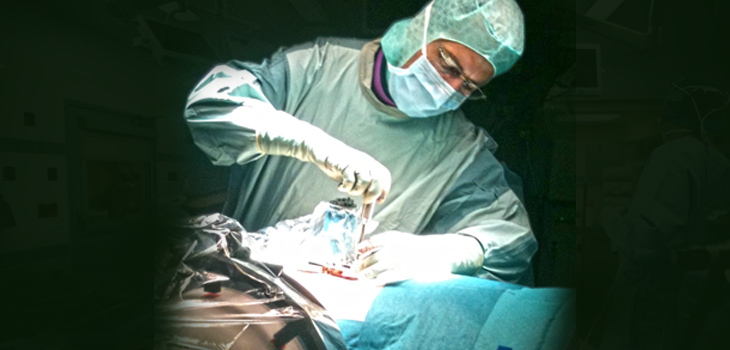
1. U.S. spine surgeons use navigation in only 16% of their procedures and robotics in only 5%.
Roughly a half dozen major orthopedic companies are now offering intelligent surgical assist devices, often referred to as robots, for large joint surgery and, to lesser extent spine surgery. But the predecessor of today’s spine surgery “robots”, Medtronic plc’s StealthStation surgical navigation system and O-Arm surgical imaging system has enabled “faster, more precise and less invasive spinal procedures in a reduced radiation environment” spine surgeons are still in the early, evaluative stages of making the transition to the robot. According to the RBC survey, spine surgeons use navigation in about 16% of their procedures— which seemed low to us. They do however expect this figure to almost double within five years (to 30%), and 66% expect their use of navigation to increase in the next 5 to 10 years.
Medtronic investing $20 million in Mazor Robotics and the commercial launch of the Mazor X at this week’s North American Spine Society meeting in Boston attracted a tremendous amount to surgeon interest. Globus Medical, Inc. bought Excelsius Surgical in 2014 and is developing a robot for spine use but it is not expected to be approved and on the market until 2017. Zimmer Biomet Holdings, Inc. acquired Medtech SA, the maker of the ROSA robot, which is used in 20 hospitals across Europe, North America, Asia and the Middle East.
Despite all the buzz, the current use of robotics by the spine surgeons RBC surveyed is only at 5%. RBC’s analysts are expecting robotic use in spine to double within 12 months. Five years from now, RBC expects use to rise to 17% and jump to 28% at the 10-year mark.
Sixty-six percent of the surgeons surveyed said that they expect robotics will be a more important part of their practice in 10 years. Finally, RBC expects surgeon interest in robotics and rising manufacturer focus to drive product development and higher adoption.
2. Stryker’s tritanium, Medtronic’s unleaded O-Arm and LDR/ZBH/s Mobi-C scored top marks from spine surgeons in the survey.
Stryker Corporation’s tritanium posterior lumbar cage which initially launched in April/May 2016, has the advantages of a highly porous titanium alloy for bone in-growth and fixation as well as good visualization on CT and X-ray. Even though Stryker has had a limited launch so far in 2016, surgeons rated this as the most significant of new product offerings in spine. According to RBC, Stryker is looking to develop new geometries and products that cannot be made without their 3-D printing capabilities.
Medtronic’s unleaded O-Arm procedure, which is not yet FDA approved, potentially eliminates radiation exposure and the need to wear lead aprons. Surgeons rated this the second highest on the survey, and this may not be surprising as Medtronic told RBC that O-Arm accounts are up 24% year-over-year in fiscal 2016.
LDR/ZBH came in third with their Mobi-C artificial cervical disc. Current research has shown impressive results including one entitled “Subsequent Surgery Rates After Cervical Total Disc Replacement Using a Mobi-C Cervical Disc Prosthesis Versus Anterior Cervical Discectomy and Fusion: A Prospective Randomized Clinical Trial With 5-year Follow-up” (J Neurosurg Spine 2016 May;24(5):734-45). The authors conclude, “Five-year results showed treatment with cervical TDR [total disc replacement] to result in a significantly lower rate of subsequent surgical intervention than treatment with ACDF [anterior cervical discectomy and fusion] for both 1 and 2 levels of treatment.” Couple this with Aetna’s and Anthem’s recent decisions to cover 2-level cervical disc cases and we see why surgeons expect LDR to remain the #1 fastest market share in cervical artificial discs.
3. Artificial cervical disc market share, say surgeons, is rising.
Surgeons responded that the percentage of cervical artificial disc procedures would increase from approximately 6% in 2014 to 12% in 2017. By comparison, surgeons said that they expect cervical fusion rates to drop from 94% in 2014 to an expected 88% in 2017.
Additionally, the surgeons expect that the percentage of cervical fusion cases that could transition to cervical artificial disc cases will likely increase from 12% currently to 15% in one year, 18% in two years and 21% in five years.
According to RBC, new implant technologies, increased surgeon training and recent insurance coverage for 2-level artificial disc procedures are driving the penetration of artificial cervical disc procedures.
Mobi-C and Prestige LP are the only FDA-approved cervical discs for both 1- and 2-level procedures, and Mobi-C is the artificial disc most frequently chosen by surgeons according to RBC.
4. 81% of surveyed spine surgeons expect steady spinal fusion volume in their practices, 13% expect it to be up, and only 6% expect it to be down in the 3Q2016.
July through September (3rd quarter) is typically a slow season as physicians and patients are on vacation, most surgeons also take vacation during this time, at least in my case I already booked with outer banks rentals for my vacation this year. However, the expectation that spinal fusion volume will remain steady or increase by the vast majority (94%) shows, according to RBC, that the market is at least stable. U.S. surgeons also thought the number of patients coming into their offices was much higher in September than in July or August,
5. Surveyed surgeons said that their fusion volume growth was mid-single-digits in 2016 and the type of fusion cases were 54% lumbar, 36% cervical and 10% thoracic.
According to RBC, the Millennium Research Group estimated that in 2015 U.S. spine procedures grew at about 4%, so the expectation of mid-single digits for 2016 with this survey indicates continued solid growth.
The survey also showed a steady increase in spinal procedure backlogs. One year ago, U.S. surgeons put backlogs at 4.7 weeks, 5.2 weeks six months ago and 5.4 weeks currently. Looking to the future, they expect it to be at 5.5 weeks in six months and 5.8 weeks in one year.
Further confirmation that the spine market remains stable is found in surgeon expectation of a slight lowering of spinal implant pricing in 2017 compared to 2016, and their expectation that cervical artificial disc cases will rise 25% in 2017.
6. Reimbursement is still an issue. Almost half of surveyed surgeons say it is more difficult.
About 48% of surgeons said that it has become more difficult to get lumbar spinal fusion procedures reimbursed by commercial payors in the 3rd quarter of 2016, but this compares to 52% in the 3rd quarter of 2015. That trend is similar in workers’ compensation where the response was more difficult in 37% in the 3rd quarter of 2016 compared to 38% in the 3rd quarter of 2015. The possible silver lining in this news is that the trends, while difficult, may be stabilizing for commercial or workers’ compensation.
This contrasts with a 13% increase in surgeons responding that getting lumbar spinal fusion procedures reimbursed by Medicare and Medicaid during the 3rd quarter of 2016 was more difficult compared to the 3rd quarter of 2015.
When asked if there has been any change in reimbursement over the last six months for cervical spine fusion procedures in their practices, surgeons reported commercial, workers’ compensation, Medicare, and Medicaid all were slightly worse compared to 2015.
This is despite some positive changes occurring to the Affordable Care Act. The Centers for Medicare and Medicaid Services (CMS) originally had two payment models to choose from under MACRA—the Merit-Based Incentive Payment System—and the Advanced Alternative Payment Models. Now there are four models to choose from. Also, there are eight new spine codes from CMS for ambulatory surgery centers in 2017.
Finally, the responding surgeons reported that reimbursement specific to degenerative disc disease, and disc herniation worsened over the last six months as compared to the 2015 survey.
7. And, with regards to future reimbursement, surgeons are not hopeful.
Of the surveyed surgeons 57% said that they expect commercial reimbursement for lumbar spinal fusion procedures over the next year to become more difficult—which is an increase from 43% in the 2015 survey, but still not close to the high levels seen between 2011 and 2013.
Surgeons also expect that commercial reimbursement for cervical and thoracic spinal fusion procedures will be slightly more difficult, but less so than lumbar.
A study published in Spine entitled “Effects of a Commercial Insurance Policy Restriction on Lumbar Fusion in North Carolina and the Implications for National Adoption” (June 2016; Volume 41; Issue 11; 647–655) concluded that changes in insurance coverage policies for lumbar spinal fusion resulted in a reduction in lumbar spine fusions in North Carolina, and that broader adoption could influence rates nationally.
Heavier scrutiny is surely being seen for justification of the need for spinal fusion among payers.
8. Most surgeons expect implant prices to rise.
Although the patient demographics in the U.S. will continue to provide a steady demand for spine care and spine surgery, the type of surgery is changing, say responding surgeons, with minimally invasive procedures slowly siphoning off procedures from the traditional fusion procedures.
Most surgeons surveyed expect that implant prices are on an upward trend and expect that prices in 2017 will rise faster than at any time in the previous three years.
However, RBC feels the implant pricing pressures are at the very least stable as innovative manufacturers like NuVasive, Inc. and K2M, Inc. are likely to report low-single-digit pricing declines. They also report that implant prices in the hip and knee markets have seen an easing of pricing pressure.
9. MIS is increasing popular
Minimally invasive spine (MIS) surgery continues to gain in popularity with 67% of surveyed surgeons reporting an increased use of MIS procedures and lateral procedures for lumbar fusion projected for 2017.
RBC feels MIS will continue to grow significantly and NuVasive with maximum access surgery posterior lumbar interbody fusion (MAS PLIF), maximum access surgery transforaminal lumbar interbody fusion (MAS TLIF) and extreme lateral interbody fusion (XLIF) will continue to dominate the market share.
10. NuVasive’s MAGEC system get a big thumbs up.
Scoliosis surgeons are very interested in a magnetically adjustable implant technology which is used in early onset and idiopathic scoliosis in patients under ten years of age having a Cobb angle of 30 degrees or more. After an initial surgery to implant the device, all distraction and retraction can be performed non-invasively at outpatient visits eliminating further surgeries.
Although 71% of scoliosis surgeons are interested in the new technology, only 6% have used it in their practice. Surprisingly 75% of surgeons said that the new MAGEC technology would lead to the use of NuVasive’s products for scoliosis patients in their practice. Surgeons expected to use MAGEC in about 27% of their early onset pediatric scoliosis patients.
Author
React:
Discussion
This is a fascinating development. In my practice we've seen similar outcomes with the revised protocol. The key differentiator seems to be patient selection criteria. Has anyone else noticed the correlation with BMI thresholds?
Great point. I'd push back slightly on the conclusion, the sample size in the cited study is too small to draw population-level inferences. That said, the directional signal is compelling and worth a larger RCT.
We implemented a similar approach last year. Early results are promising but we're still gathering 12-month follow-up data. Happy to share our protocol if anyone is interested.
Join the conversation
Orthopedic professionals are discussing this. Sign in and upgrade to read every comment and add your voice.