
Single Largest Nonunion Study Ever
Largest Nonunion Study Ever!; Latest News on Human Tissue Regeneration; Causal Link Between Age and OA Defined
7 min read Premium comments
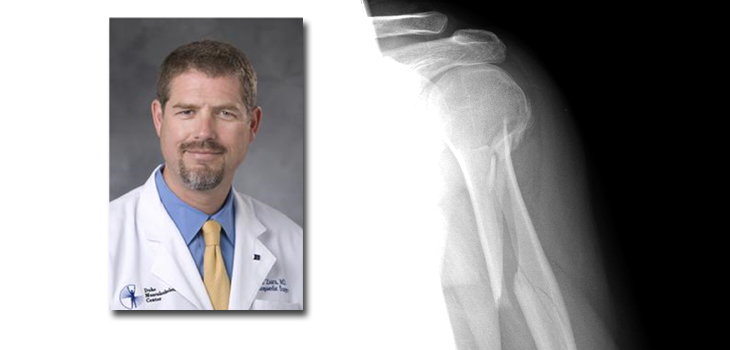
What if you could have an algorithm on hand to tell you the rate of nonunion for a specific bone for a specific patient sitting in front of you? It’s on the horizon, say researchers. Led by Bioventus, LLC, a team of scientists has completed the largest fracture nonunion study ever undertaken.
Robert D. Zura, M.D. is the Robert D’Ambrosia Professor and Department Head of orthopedics at Louisiana State University. Dr. Zura, lead study author, told OTW, “We already knew that all nonunions are a function of severity, treatment, and location, but this study, which made use of the Truven database that includes 90 million patients and roughly 788, 000 total fractures, has allowed us to pinpoint the unique factors that influence whether a fracture will heal or not.
“I was a consultant for Bioventus for several years and I knew that their goal was to address extremely difficult fractures. We shared a concern that the nonunion literature was not sufficiently robust, so collaborating on this study was a natural fit.
“We found that among 309, 330 adult fractures (18-63 years of age) in 18 bones, the overall nonunion rate was 4.93%. Patients with severe fracture, high body mass index, smoking and alcoholism were at a higher risk of nonunion. People taking certain drugs such as antibiotic, anticoagulants and opiates also had an elevated risk of nonunion.
“Our team gathered over 250 pieces of data on each patient and we were able to distill those down to 45 factors that may affect nonunion. From that we were able show correlations (not necessarily causation). For example, we found that cardiovascular disease was actually protective of nonunions (although we don’t know why). It is now possible—for each of the most commonly fractured bones—to identify what exactly will influence fracture healing. Someone who breaks a toe (metatarsal) stepping off a curb is going to have a different healing rate than someone who suffered a similar fracture secondary to a crush or a high speed motor vehicle accident. The fundamental injuries are different…and the skill level of the surgeon also comes into play.
“The ultimate goal is to have a web-based algorithm for fractures. This would include age and sex, would have 6-11 questions specific to each bone, and could predict the rate of nonunion. It would be great to be able to sit with a patient and say, ‘This is the risk of your fracture not healing. But look what happens if you lose weight, take your diabetes medication, and stop smoking.’”
R. Grant Steen, M.D. is Manager of Medical Affairs at Bioventus. Asked how he hopes this work will change the way physicians assess nonunion risk, Dr. Steen told OTW, “This paper should help physicians to assess nonunion risk objectively, for the first time. In the past, everyone knew (or thought they knew) which risk factors were important but there was no way to assess the relative importance of the various risk factors. Some physicians focused on the nonunion risk associated with smoking, while others were more concerned with diabetes or old age or obesity. For the first time, these various risk factors can be put in context with one another.
“Furthermore, we were able to separate out the risks that can be attributed to an individual risk factor. For example, many physicians were concerned with the nonunion risk associated with smoking. But it turns out that the nonunion risk attributed specifically to smoking is rather small. That’s because smoking is a surrogate marker for a whole host of other risk factors. If all you know about a patient is that they smoke, then it is reasonable to assume that patient is at risk of nonunion.
“But that patient is probably also older, male, obese, out of shape, hypertensive, and may even be diabetic; all of those traits tend to occur together and each is a risk factor for nonunion. Nevertheless, some smokers are not elderly and overweight.
“So, if you can factor in all that you know about a patient, then the prediction of risk will be more accurate. We enable physicians to determine risk associated with each individual risk factor, including smoking, but also including age, gender, physical condition, and disease co-morbidities.”
As for what this research means for the future of Bioventus, Dr. Steen noted, “Bioventus is an industry leader in treatment of fresh fractures and fracture nonunions. In order to help patients, we need to better understand which patients are likely to need greater care and attention and which are likely to heal more easily.
“In the near future, we will roll out a computer algorithm (Fracture CARE; Computer Algorithm for Risk Estimation) designed to run on a laptop or handheld device. The CARE algorithm uses information from this paper to predict the risk of nonunion. CARE will be freely available to all clinicians, to help them identify their most problematic patients.”
This study was funded by Bioventus.
Found! Regeneration Regulators Common Across Species!
The top of the food chain can learn quite a bit from those at the bottom. While some fish and other lower organisms can regenerate tissue, we humans lag behind. Scientists at the MDI Biological Laboratory in Bar Harbor, Maine, are digging into the genes of these enviable organisms to learn how to activate such regenerative mechanisms in humans. They have just identified genetic regulators governing regeneration that are common across species.
Benjamin L. King, Ph.D. and Voot P. Yin, Ph.D., both with MDI, have identified these common genetic regulators in three regenerative species: the zebrafish, a common aquarium fish originally from India; the axolotl, a salamander native to the lakes of Mexico; and the bichir, a ray-finned fish from Africa.
Drs. King and Yin commented to OTW, “The long-term goal of our research at MDI Biological Laboratory is to understand how we may be able to enhance human regenerative capacity after injury. Humans can regenerate some tissues, such as blood, skin, liver and hair, but not others.
“There are other vertebrates, such as zebrafish, bichir and axolotl, which can regenerate many more different types of tissues, including limbs or appendages. At a cellular level, we knew that all three animals form a specialized tissue after wound healing, called the blastema. That is required for regeneration and is not formed in animals (like humans) that cannot regenerate appendages.
“The goal of this study was to determine whether these animals used the same genetic circuit to create and maintain the blastema tissue after injury. As these animals shared a last common ancestor more than 420 million years ago, it implies that nature has conserved these molecular mechanisms down through evolution. The identification of a common molecular pathway for regeneration raises the possibility that drugs could be developed to trigger the dormant molecular mechanism in humans.
“Given the remarkable regenerative capacity of limb tissues in all three model systems, we expected to identify some overlap in the molecular pathways during formation of the blastema, the critical first step in the regeneration process.
“But we didn’t expect to find that they were exactly the same, especially since we were looking at three different types of appendages: the axolotl limb, the bichir pectoral fin and the zebrafish tail. Again, our discovery implies that the molecular pathways for regeneration have been conserved during evolution.
“Orthopedic surgeons should know that the concept of limb and appendage regeneration in humans—although it may be years away—is within the realm of possibility.
“Also, they should know that this discovery could have important intermediate applications in two significant ways. Firstly, defining the molecular pathways governing regeneration could lead to the development of drugs that promote the regeneration of nerves at the site of an amputation in humans. This could, in turn, allow bioengineers to develop highly sophisticated prosthetic devices capable of interacting with these nerves. The demand for new medical strategies to address limb loss is increasing as a result of a dramatic rise in the number of amputations stemming from the increased worldwide incidence of diabetes.
“Secondly, enhancing the rate of tissue repair and regeneration could significantly hasten the rate of wound healing. If wounds, be they surgical or accident-induced, heal quickly, this will decrease the likelihood of infection and pain. Together, the immediate applications of limb regeneration research will result in significant improvements in patient quality of life.”
Eureka…Causal Link Between Age-Related Cells and OA
Researchers from Mayo Clinic have new research indicating a causal link between the aging-related cells (senescent cells) and osteoarthritis (OA). James Kirkland, M.D., Ph.D., is director of the Robert and Arlene Kogod Center on Aging at Mayo Clinic in Rochester, Minnesota. He told OTW, “This is the first time there has been evidence of a causal link, as opposed to just an association.
“With age, senescent cells accumulate in various tissues and produce inflammation mediators that induce immune cells to filter the tissues. These cells also appear to underlie the majority of age-related chronic diseases; they also seem to account for geriatric-like symptoms such as frailty and mild cognitive impairment, as well as lack of resilience after surgery.
“In our most recent study, we injected senescent and non-senescent cells from ear cartilage into the knee joint area of mice. After 10 days, mice who received the senescent cells had leg pain, impaired mobility and characteristics of osteoarthritis. They even developed thinning of the articular cartilage and bone spurs.
“Unlike normal cells, senescent cells have pro-survival pathways that they depend on…and they produce things that damage the adjacent cells. They have upregulation of these pathways that defend them against suicide; if we disable those pathways then the senescent cells will self-destruct.”
As for how to target these cells, Dr. Kirkland told OTW, “What normally kills typical cells won’t kill these. However, we discovered that some drugs, known as senolytics, do kill senescent cells. This work suggests that we may be able to develop an entire class of drugs that treats not only osteoporosis but a variety of age-related problems such as muscle loss, cardiovascular dysfunction, and prevention of cataracts.
“The next step is to give senolytics to see if can prevent and/or alleviate OA. They could be given locally by injection or taken by mouth. Only a few doses may be needed because senescent cells cannot divide. I wouldn’t be surprised if proof of concept trials with senolytics for a variety of age-related conditions begin early next year. While we may not have data for a few years, at least some senolytics are repurposed drugs and thus we know a lot about their safety profiles.”
Author
React:
Discussion
This is a fascinating development. In my practice we've seen similar outcomes with the revised protocol. The key differentiator seems to be patient selection criteria. Has anyone else noticed the correlation with BMI thresholds?
Great point. I'd push back slightly on the conclusion, the sample size in the cited study is too small to draw population-level inferences. That said, the directional signal is compelling and worth a larger RCT.
We implemented a similar approach last year. Early results are promising but we're still gathering 12-month follow-up data. Happy to share our protocol if anyone is interested.
Join the conversation
Orthopedic professionals are discussing this. Sign in and upgrade to read every comment and add your voice.