
Henaku K. Yirenkyi, M.D. is the latest surgeon to joint OrthoAtlanta. A board-eligible orthopedic surgeon whose specialties include minimally invasive spine surgery, operative and non-operative spine care for adults and traumatic spinal injury, Dr. Yirenkyi believes in conservative care.
Henaku K. Yirenkyi, M.D. Joins OrthoAtlanta
1 min read Premium comments
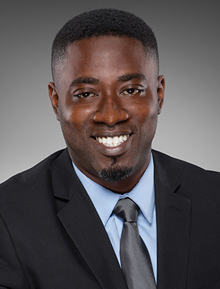
According to the September 22, 2016 news release, “… Among the many conditions treated by Dr. Yirenkyi are sciatica, scoliosis, herniated discs, lumbar spinal stenosis and back pain. Dr. Yirenkyi also treats pediatric conditions, including scoliosis, for children age 14 years and older.”
Dr. Yirenkyi, notes, “Care begins with knowing your patient personally. Together we will optimize non-operative spine care and treatment and only intervene surgically when necessary.”
“We are pleased to welcome Dr. Yirenkyi to our OrthoAtlanta Stockbridge practice, ” stated Dr. Michael Behr, OrthoAtlanta Medical Director. “Dr. Yirenkyi is fellowship-trained in cervical, thoracic and lumbar pathology, and both anterior and posterior spinal approaches, offering multiple treatment options for spinal care.”
Dr. Henaku Yirenkyi received his Doctor of Medicine degree from the University of Cincinnati, College of Medicine, in Cincinnati, Ohio, followed by an orthopedics internship and Orthopaedic Surgery Residency at Orlando Regional Medical Centre in Orlando, Florida. Dr. Yirenkyi completed his Spine Surgery Fellowship at SUNY Upstate Medical University, in Syracuse, New York.
Dr. Yirenkyi told OTW, “The most exciting thing so far has been the response from the Piedmont Henry Hospital and the local community. It has been very welcoming and I am very excited about being a part of the Stockbridge, Georgia, community.”
With experience in both anterior and posterior spinal approach, Dr. Yirenkyi offers patients multiple treatment options. He added, “The ability to address the pathology from the least invasive and direct approach, can spare a patient from long term recovery periods.”
Author
React:
Discussion
This is a fascinating development. In my practice we've seen similar outcomes with the revised protocol. The key differentiator seems to be patient selection criteria. Has anyone else noticed the correlation with BMI thresholds?
Great point. I'd push back slightly on the conclusion, the sample size in the cited study is too small to draw population-level inferences. That said, the directional signal is compelling and worth a larger RCT.
We implemented a similar approach last year. Early results are promising but we're still gathering 12-month follow-up data. Happy to share our protocol if anyone is interested.
Join the conversation
Orthopedic professionals are discussing this. Sign in and upgrade to read every comment and add your voice.