
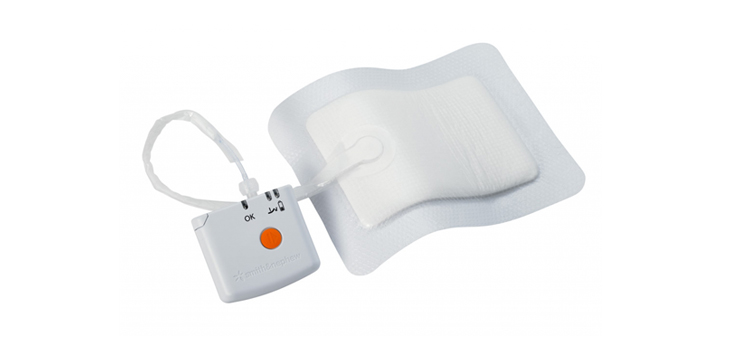
Smith & Nephew plc has announced the publication of clinical evidence from a randomized controlled trial (RCT) highlighting improved patient outcomes following orthopedic surgery. A total of 220 patients undergoing primary hip or knee replacement compared the use of PICO, the company’s single use Negative Pressure Wound Therapy (NPWT) system, with standard dressings on closed surgical incisions.
Good Results for S&N’s NPWT System
2 min read Premium comments
Secondary
Mr. Sudheer Karlakki, lead RCT author and consultant orthopaedic surgeon at The Robert Jones and Agnes Hunt Orthopaedic Hospital in the UK, explained in the September 8, 2016 news release, “By introducing PICO as a prophylactic measure we have been able to demonstrate predictable wound healing following total hip and knee replacement procedures. Better wound management offers significant value to our hospital both in terms of reducing associated healthcare costs and by improving each patient’s outcome and experience.”
As indicated in the news release, “The use of PICO resulted in a four-fold reduction in the number of patients experiencing Grade 4 distribution of wound exudate within the dressing when compared with standard wound dressing in those undergoing joint replacement. There was also a four-fold decrease (from 8% to 2%) in superficial surgical site complications. A further benefit was shown in the significant reduction in the number of total dressing changes required per patient using PICO. Fewer dressing changes may lead to greater patient comfort and less burden on nursing resource. Taking into account reduced LOS [length of stay] for the study group, lower wound complications, lower dressing changes and potential cost savings for wound care in the community due to reduced wound complications in the study group, the authors believes the cost of the PICO is justifiable.”
Mr. Karlakki told OTW, “Orthopaedic surgeons should be aware that PICO is an invaluable wound dressing for managing high risk patients. The study has shown that the PICO system is able to deliver predictable outcomes in these patients undergoing primary hip or knee arthroplasty. Patients with a higher BMI [Body Mass Index], an ASA [American Society of Anesthesiologists] grade of -3, comorbidities or complex conditions such as diabetes, should be managed with PICO to reduce their length of stay in hospital and reduce the risk of post-surgical complications.”
“Our patients experiences of using the PICO system have been very positive. Patients who have had multiple hip replacements note the difference in healing time, with a reduced length of hospital stay enabling them to return to their daily lives more quickly. We have also had many encouraging comments about the comfort and discreteness of the dressing due to the negative pressure, and the reduced number of dressing changes is a huge benefit to our patients.”
Author
React:
Discussion
This is a fascinating development. In my practice we've seen similar outcomes with the revised protocol. The key differentiator seems to be patient selection criteria. Has anyone else noticed the correlation with BMI thresholds?
Great point. I'd push back slightly on the conclusion, the sample size in the cited study is too small to draw population-level inferences. That said, the directional signal is compelling and worth a larger RCT.
We implemented a similar approach last year. Early results are promising but we're still gathering 12-month follow-up data. Happy to share our protocol if anyone is interested.
Join the conversation
Orthopedic professionals are discussing this. Sign in and upgrade to read every comment and add your voice.