
Cartilage is one of the more recalcitrant tissues in the human body. Resistant to repair, oblivious (in the main) to researchers attempt at regeneration, sensitive to trauma and tearing, cartilage failure fuels the onslaught of hip and knee joint replacement surgery.
FDA Approves Test (IDE) of Cartilage Repair Product
1 min read Premium comments
Secondary
A newcomer is now joining the battle line of cartilage repair.
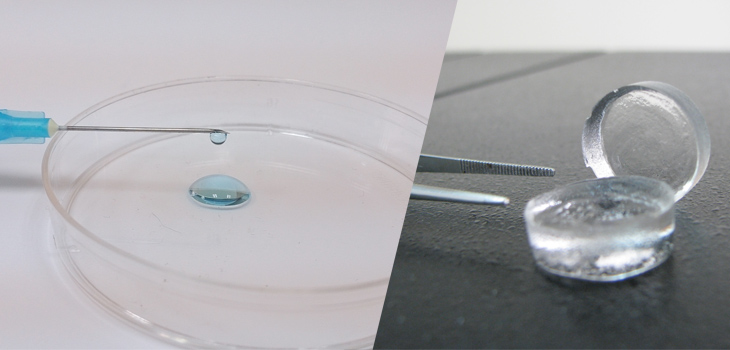
The Food and Drug Administration (FDA) has just approved an Investigational Device Exemption (IDE) for GelrinC, a product made by Regentis Biomaterials Ltd. The approval will allow the firm to initiate a Phase III clinical study of GelrinC, a novel treatment for focal cartilage defects in the knee.
According to its maker, GelrinC helps restore articular cartilage by allowing for the growth of high quality knee cartilage that, once grown, fits tightly with surrounding tissue and underlying bone.
Regentis Biomaterials president and CEO Alastair Clemow, M.D. says that the cartilage repair market is the largest unmet need in orthopedic sports medicine today, representing an estimated market opportunity of more than US $1 billion.
Brian J. Cole M.D., from Rush University Medical Center in Chicago, calls the technology a “potential game changer in the cartilage repair space. GelrinC has promising clinical outcomes to date and the pre-clinical work is very supportive.”
Regentis Biomaterials has offices in Or Akiva, Israel and Princeton, New Jersey. It is a privately held company focused on developing and commercializing proprietary hydrogels for tissue regeneration. The company’s core technology is its biodegradable hydrogel called Gelrin based on polyethylene glycol diacrylate and denatured fibrinogen originally developed at the Technion – Israel Institute of Technology by Dror Seliktar, M.D. The company claims that Gelrin hydrogel platform combines the stability and versatility of a synthetic material with the bio-functionality of a natural substance for a range of clinical applications.
Author
React:
Discussion
This is a fascinating development. In my practice we've seen similar outcomes with the revised protocol. The key differentiator seems to be patient selection criteria. Has anyone else noticed the correlation with BMI thresholds?
Great point. I'd push back slightly on the conclusion, the sample size in the cited study is too small to draw population-level inferences. That said, the directional signal is compelling and worth a larger RCT.
We implemented a similar approach last year. Early results are promising but we're still gathering 12-month follow-up data. Happy to share our protocol if anyone is interested.
Join the conversation
Orthopedic professionals are discussing this. Sign in and upgrade to read every comment and add your voice.