
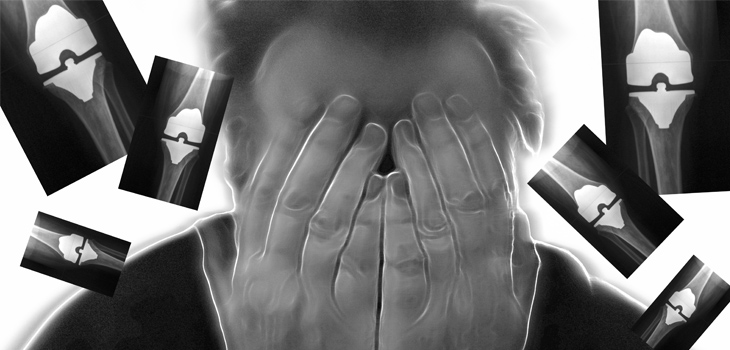
Are depressed patients more likely to be readmitted 90 days after total joint arthroplasty (TJA)? It’s possible, says new research from the New York University (NYU). After examining roughly 200, 000 records from the California Healthcare Cost and Utilization Project database, scientists found that depression was indeed associated with a significantly higher risk of readmission after total hip arthroplasty (THA) and total hip arthroplasty (TKA).
Depression Associated With Readmission After TJA
1 min read Premium comments
Secondary
Heather T. Gold, Ph.D., is associate professor of population health, orthopedic surgery, and medicine at NYU Langone Medical Center. Dr. Gold told OTW, “We are trying to better understand potentially modifiable factors that might influence readmission after orthopedic surgery, and this was one we could evaluate in a large population. This kind of work can help inform care coordination with other healthcare providers to make sure patients get the best health outcomes and that healthcare resources are used optimally.”
“The most important thing is for surgeons to screen patients for risk factors such as depression and encourage or facilitate patients to get psychological and/or psychiatric help when needed. There are very quick depression screening instruments to implement. Often total joint replacement is elective surgery and potentially could be delayed slightly while a patient undergoes mental health treatment. However, we do know that pain can be associated with depression, so there may be a balance to strike between treatment of pain and treatment of depression.”
“This should help surgeons think beyond the surgery experience patients have. Patients come in with other comorbid conditions, including mental health conditions, that first need to be recognized, and then patients should be referred for care in other specialties when indicated. Mental health conditions affect nearly 1 in 5 adults and are bound to be present in orthopedic practices.”
“Just like our tobacco cessation program at the hospital aims to reduce tobacco use to improve surgical outcomes, we should be thinking about how to pre-manage other health conditions to improve surgical outcomes and reduce readmission risks.”
React:
Discussion
This is a fascinating development. In my practice we've seen similar outcomes with the revised protocol. The key differentiator seems to be patient selection criteria. Has anyone else noticed the correlation with BMI thresholds?
Great point. I'd push back slightly on the conclusion, the sample size in the cited study is too small to draw population-level inferences. That said, the directional signal is compelling and worth a larger RCT.
We implemented a similar approach last year. Early results are promising but we're still gathering 12-month follow-up data. Happy to share our protocol if anyone is interested.
Join the conversation
Orthopedic professionals are discussing this. Sign in and upgrade to read every comment and add your voice.