
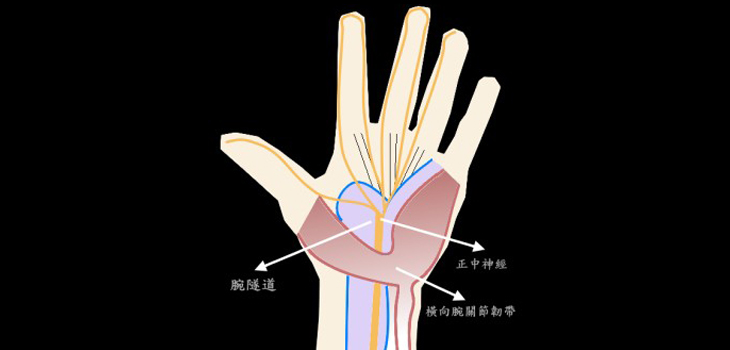
In a study of 207 patients with carpal tunnel syndrome, researchers in China found that release through double small incisions was minimally invasive, provided good visualization for the surgeon and resulted in a good appearance of the scars when compared with standard open release or endoscopic release procedures. Their study was published in Plastic and Reconstructive Surgery. (A Randomized Comparison of Double Small, Standard, and Endoscopic Approaches for Carpal Tunnel Release by Zhang, Xu M.D., Ph.D.; Huang, Xiangye M.D.; Wang, Xianhui M.D.; Wen, Shumin M.D.; Sun, Jianxin M.D.; Shao, Xinzhong M.D. Plastic & Reconstructive Surgery: September 2016 – Volume 138 – Issue 3 – p 641–647)
Chinese Research Favors Double Incision Carpal Tunnel Surgery
1 min read Premium comments
Secondary
For the study researchers divided the patients to either a carpal tunnel release treatment using double small incisions, a standard incision group or an endoscopic release group. All of the participants were in their mid-forties.
The cohorts had no significant differences regarding symptom severity or function status and no significant differences with regard to age, gender, affected side or duration of symptoms, according to Healio reporter Bruce Thiel.
The researchers wrote, “Our study found that carpal tunnel release through the double small incisions combined the advantages of the standard open carpal tunnel release and endoscopic carpal tunnel release. The advantages include a minimally invasive procedure, good visualization of the operating field, a less technically challenging procedure, a low wound complication rate and a good appearance.”
Author
React:
Discussion
This is a fascinating development. In my practice we've seen similar outcomes with the revised protocol. The key differentiator seems to be patient selection criteria. Has anyone else noticed the correlation with BMI thresholds?
Great point. I'd push back slightly on the conclusion, the sample size in the cited study is too small to draw population-level inferences. That said, the directional signal is compelling and worth a larger RCT.
We implemented a similar approach last year. Early results are promising but we're still gathering 12-month follow-up data. Happy to share our protocol if anyone is interested.
Join the conversation
Orthopedic professionals are discussing this. Sign in and upgrade to read every comment and add your voice.