
Ashley Zapf, M.D., CAQSM (Certificate of Added Qualification in Sports Medicine), a primary care sports medicine physician, has joined Andrews Institute. Dr. Zapf, who earned her medical degree from Eastern Virginia Medical School in Norfolk, Virginia, treats neurological and musculoskeletal conditions.
Ashley Zapf, M.D. Joins Andrews Institute
1 min read Premium comments
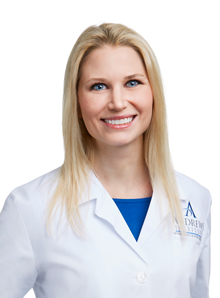
Dr. Zapf completed her residency in Physical Medicine & Rehabilitation at the Schwab Rehabilitation Hospital at the University of Chicago in Chicago, Illinois and completed her fellowship in Primary Care Sports Medicine at the University of Florida in Gainesville. She is now seeing patients at her offices located at Baptist Medical Park—Navarre, Florida, and at Andrews Institute in Gulf Breeze.
Dr. Zapf told OTW, “My first steps will involve bringing sports medicine out into the community and letting people know who I am and how I can help them. I will be doing a presentation, ‘Sports Medicine Unique to the Female Athlete’ at the upcoming Health Care That Works Conference at Andrews Institute, and a talk, ‘Maintenance of a Healthy Lifestyle’ as a part of the Golden Care Seminars. In addition, I am establishing relationships with the Navarre Youth Sports Association as well as local athletic teams.”
Asked how she best works with orthopedic surgeons, Dr. Zapf commented, “We work best as an integrated team. Together we are able to provide individualized, comprehensive treatment plans which focus on taking patients from sports injury to peak performance. Our specialties allow us to develop multimodal treatment plans which focus on all aspects of recovery: pain and inflammation control, healing with maximal flexibility and strength, and biomechanical analysis for return to play and future injury prevention.”
React:
Discussion
This is a fascinating development. In my practice we've seen similar outcomes with the revised protocol. The key differentiator seems to be patient selection criteria. Has anyone else noticed the correlation with BMI thresholds?
Great point. I'd push back slightly on the conclusion, the sample size in the cited study is too small to draw population-level inferences. That said, the directional signal is compelling and worth a larger RCT.
We implemented a similar approach last year. Early results are promising but we're still gathering 12-month follow-up data. Happy to share our protocol if anyone is interested.
Join the conversation
Orthopedic professionals are discussing this. Sign in and upgrade to read every comment and add your voice.