
Seikagaku Corporation, headquartered in Tokyo, Japan, and Ferring Pharmaceuticals of Saint Prex, Switzerland have entered into an exclusive worldwide license agreement for SI-6603 (condoliase), treatment for lumbar disc herniation.
Will a $95 Million Deal Bring Chemonucleolysis Back?
3 min read Premium comments
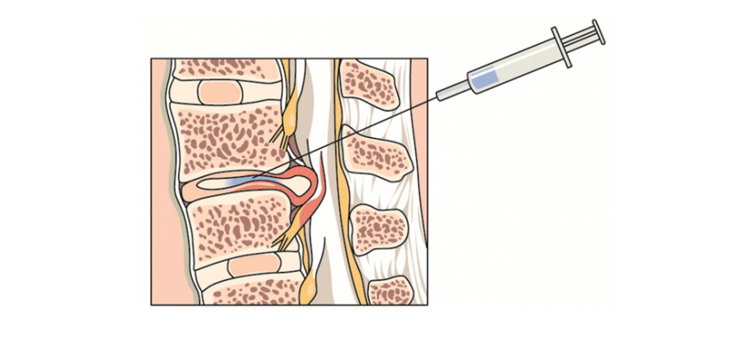
While Seikagaku will retain commercialization rights in Japan, Ferring will acquire exclusive development and commercialization rights to the rest of the world.
Condoliase is an enzyme that has high substrate specificity for chondroitin sulfate and hyaluronic acid, which are glycosaminoglycans (GAGs), and therefore major constituents of the nucleus pulposus.
Such an enzyme could, according to Seikagaku Corporation, be a new approach to chemonucleolysis.
Sound familiar?
Reinventing Chemonucleolysis
Chemonucleolysis is a non-surgical treatment for a bulging disc that involves the injection of an enzyme into the vertebral disc with the goal of dissolving the inner part of the disc, the nucleus pulposus.
Thirty years ago the enzyme of choice for chemonucleolysis was chymopapain—which is derived from papayas. Chymopapain dissolved the soft, bulging disk nucleus, shrinking the disk and reducing its pressure on nerve roots.
In 2002, authors Kim, Chin, Yoon, Jin and Cho published a review of 3, 000 cases over 14 years where chymopapain was used to treat herniated discs. Their study was published in Neurosurgery. Here is the citation: Neurosurgery. 2002 Nov;51(5 Suppl):S123-8.
As the authors wrote at the time: “Among numerous minimally invasive procedures for the treatment of herniated lumbar disc disease (HLD), chymopapain chemonucleolysis has the longest history of clinical usage. Long-term studies indicated good clinical results with a low risk for patients. However, much confusion still remains about the indications. This study was conducted to evaluate the predictors of successful outcome for chemonucleolysis and to firmly establish the proper indications for this procedure.”
So, after studying the effects of chymopapain chemonucleolysis to treat herniated lower discs on 3, 000 patients the authors reported an 85% clinical success rate with chymopapain. Specifically, the authors wrote: “The patient group with the chief complaint of leg pain achieved a better clinical outcome than the patient group with low back pain (88% versus 59%, P < 0.05). A positive straight-leg-raising test was strongly correlated with good clinical outcome (P < 0.05). Patients manifesting a soft, protruded disc had a better outcome than those manifesting diffuse bulging disc (P < 0.05). Other prognostic factors favoring a good outcome were as follows: young age, short duration of symptoms, and no bony spur or calcification on radiological study.”
Condoliase Enzyme to Treat Herniated Discs
At last year’s EuroSpine meeting in Copenhagen, Kazuhiro Chiba, Ph.D., Professor of Bio-organic Chemistry at Tokyo University of Agriculture and Technology presented a paper which showed how condoliase reduces compression on nerves and can be a less-invasive curative treatment for patients with lumbar disc herniations.
Dr. Chiba is one of the world’s leading experts in electrochemical organic reactions and their applications towards biologically active compounds especially in the field of peptides. He has authored or coauthored over 100 scientific papers.
In his paper, Dr. Chiba wrote: “Condoliase significantly improved symptoms and signs, physical function and quality of life scores in patients with lumbar disc herniations.”
Chiba also released the results of a multicenter, double-blind, randomized, placebo-controlled trial where 163 patients with lumbar disc herniations were treated. Eighty-two patients received injections of 1 mL of condoliase dissolved in 1 mL of saline and 81 patients received placebo injections.
Chiba noted the condoliase group experienced significantly better improvement in VAS (Visual Analog Scale) scores for leg pain from baseline to 13-week follow-up (P = .001) compared with the placebo group. Additionally, imaging confirmed the condoliase group saw a greater volume decrease of the herniated mass than the placebo group.
The most common adverse event in the study was back pain, which was more evident in the condoliase group (36.6%) than the placebo group (33.3%), but most events were rated as mild or moderate, Chiba said.
The $95 Million Deal
Seikagaku reports that it will receive an upfront payment of US $5 million from Ferring as well as milestone payments up to a maximum total amount of US $90 million over multiple years based on how well Ferring develops and commercializes condoliase (SI-6603).
Seikagaku has been developing condoliase (SI-6603) in Japan and in the U.S. and is presently conducting two Phase III clinical trials in the U.S. The trials are pivotal double-blind studies and include an open-label safety study. The company hopes to accelerate the development and therefore commercialization of condoliase.
Non-Surgical Relief of Sciatic Nerve Pain
The promise of relieving sciatic nerve pain non-surgically is certainly appealing. And the experience with chymopapain while generally positive, did not end well.
So the prospects of a novel approach to chemonucleolysis with a new, potentially safer, enzyme, two highly sophisticated partners in Seikagaku Corporation and Ferring Pharmaceuticals based on new scientific work by Dr. Chiba is a most welcome development.
Author
React:
Discussion
This is a fascinating development. In my practice we've seen similar outcomes with the revised protocol. The key differentiator seems to be patient selection criteria. Has anyone else noticed the correlation with BMI thresholds?
Great point. I'd push back slightly on the conclusion, the sample size in the cited study is too small to draw population-level inferences. That said, the directional signal is compelling and worth a larger RCT.
We implemented a similar approach last year. Early results are promising but we're still gathering 12-month follow-up data. Happy to share our protocol if anyone is interested.
Join the conversation
Orthopedic professionals are discussing this. Sign in and upgrade to read every comment and add your voice.