
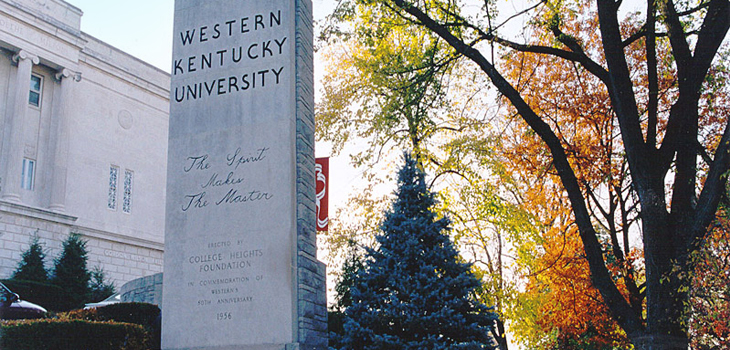
Western Kentucky University (WKU) at Bowling Green, Kentucky, and Med Center Health have agreed to build a new, $22 million sports medicine complex on its beautiful campus.
University and Med Center Join To Build Sports Medicine Facility
1 min read Premium comments
Secondary
The roughly 140, 000-square-foot facility will provide space for Med Center Health’s sports medicine program, WKU’s doctor of physical therapy program and an indoor multipurpose training facility for physical therapy students and WKU athletics, according to Aaron Mudd of the Bowling Green Daily News. He wrote that space currently used by the physical therapy program in The Medical Center-WKU Health Sciences Complex is being offered to the University of Kentucky for a medical school in Bowling Green.
Doris Thomas, Med Center Health’s vice president for marketing and development, told the Daily News, “The Medical Center was poised to make a significant capital investment on its campus to create space for UK’s Medical School expansion in Bowling Green. The timing of this along with the unique position of both The Medical Center and WKU provided an opportunity to creatively address the space needs of the new Medical School while providing WKU an indoor sports complex on its campus.”
“This project will help provide additional trained clinicians not only for Med Center Health but for health care entities across our region. We continue to face a shortage of physicians, physical therapists, nurses and other allied health professionals and we see this project as something we can do locally to help address the shortage, ” she said. The Medical Center will also become the university’s official health care provider, with marketing opportunities.
Author
React:
Discussion
This is a fascinating development. In my practice we've seen similar outcomes with the revised protocol. The key differentiator seems to be patient selection criteria. Has anyone else noticed the correlation with BMI thresholds?
Great point. I'd push back slightly on the conclusion, the sample size in the cited study is too small to draw population-level inferences. That said, the directional signal is compelling and worth a larger RCT.
We implemented a similar approach last year. Early results are promising but we're still gathering 12-month follow-up data. Happy to share our protocol if anyone is interested.
Join the conversation
Orthopedic professionals are discussing this. Sign in and upgrade to read every comment and add your voice.