
Two Oregon surgeons, Richard Edelson, M.D. and Jonathan Greenleaf, M.D., performed the first meniscus replacement procedure as part of the SUN (Safety Using NUsurface) clinical trial. The first case was performed in Oregon on patient Don Bennett’s knee. The surgery was a collaboration between Sports Medicine Oregon and Active Implants, LLC. The Oregon Outpatient Surgery Center is the only site in Oregon—and one of just 10 sites nationwide—that is enrolling patients in the SUN clinical trial. The trial is designed to assess the safety and effectiveness of the Active Implants’ NUsurface Meniscus Implant.
U.S. Meniscus Replacement Clinical Trial Under Way
2 min read Premium comments
Secondary
The meniscus is a tissue pad between the thigh and shin bones, which, once it is damaged, has a limited ability to heal. Over one million partial meniscectomies are performed in the U.S. every year, which is more than the total number of hip and knee replacement surgeries combined.
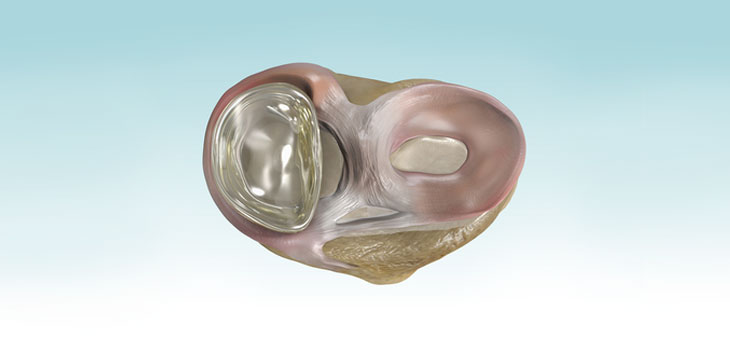
The NUsurface Meniscus Implant is made from medical grade plastic and does not require fixation to bone or soft tissues. According to the press release, the implant mimics the function of the natural meniscus and redistributes loads transmitted across the knee joint. Clinical trials are underway in the U.S., Europe and Israel to verify the safety and effectiveness of the NUsurface Meniscus Implant. This meniscus implant has been used in Europe under the CE Mark since 2008 and in Israel since 2011.
“Meniscus injuries can be a very painful and debilitating problem, even leading to potential joint replacement at a young age, ” Greenleaf said. “It is our belief that the NUsurface implant may allow patients to delay or avoid knee replacement and return to an improved level of activity without pain.”
The SUN study plans to enroll 120 patients as part of the regulatory process to gain approval from the FDA to sell the device in the U.S. Patients who agree to enter the trial are offered the NUsurface Meniscus Implant as treatment. The treatment in the SUN trial is eligible for coverage by Medicare and some private insurance companies. To be eligible for the study, participants must be between the ages of 30 and 75 and have pain after medial meniscus surgery that was performed at least six months ago.
Author
React:
Discussion
This is a fascinating development. In my practice we've seen similar outcomes with the revised protocol. The key differentiator seems to be patient selection criteria. Has anyone else noticed the correlation with BMI thresholds?
Great point. I'd push back slightly on the conclusion, the sample size in the cited study is too small to draw population-level inferences. That said, the directional signal is compelling and worth a larger RCT.
We implemented a similar approach last year. Early results are promising but we're still gathering 12-month follow-up data. Happy to share our protocol if anyone is interested.
Join the conversation
Orthopedic professionals are discussing this. Sign in and upgrade to read every comment and add your voice.