
The long saga of Regen Biologics, Inc.’s Collagen Meniscus Implant (CMI) seems to have come to a happy ending with a September 1, 2016, announcement that Stryker Corporation’s Endoscopic division had acquired Ivy Sports Medicine, LLC.
Stryker Acquires ReGen Biologics’ Meniscus Implant
2 min read Premium comments
Secondary
Ivy Sports Medicine was the institutional investor in ReGen Biologics when the FDA rescinded ReGen’s approval of the company’s meniscus implant. That decision forced ReGen to declare bankruptcy, but Ivy Sports Medicine kept the product alive and continued with a suit against the FDA, arguing the rescission was unlawful and that the FDA should have followed the reclassification route if it wanted to reclassify the device.
It was one of the most heavy-handed exercises of FDA power we have witnessed and reported in a decade. The whole sordid episode included allegations of paying off members of Congress, an unlawful FDA process, two FDA panel hearings and some rolling of heads.
A U.S. district court agreed with the FDA, but the company appealed. Ivy Sports Medical won the appeal on a 2-1 vote of the judges.
Last November, Ivy Sports Medicine announced the first implantation of the CMI in the U.S. The surgery was performed by Wayne Gersoff, M.D. in Denver, Colorado.
Ivy Sports Medicine’s portfolio is comprised of a comprehensive minimally invasive meniscal repair platform. The addition of that portfolio enables Stryker to provide customers with a complete meniscal platform, and is also highly complementary to Stryker’s current portfolio of visualization, resection, fluid management, and ACL [anterior cruciate ligament] reconstruction platforms, according to the Stryker announcement.
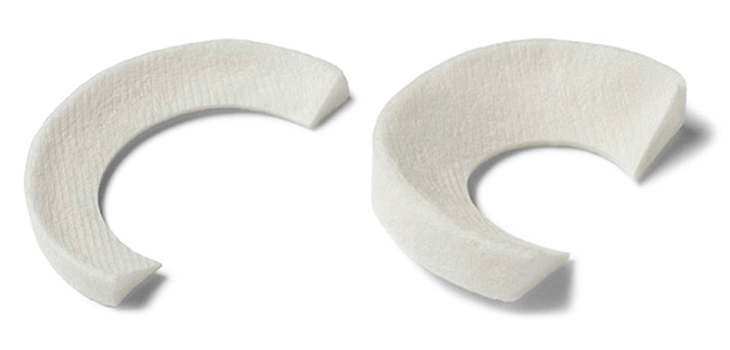
CMI is the only FDA-approved collagen meniscus implant on the market. The company describes the CMI as a “reliable and innovative all-inside repair device, as well as an inside-out meniscal suturing platform.”
“The acquisition of Ivy Sports Medicine strengthens our capabilities and fits strategically with our current portfolio. Ivy’s complete meniscal platform, coupled with their clinical history, will allow us to provide our customers with multiple solutions to address meniscal repair, ” said Matt Moreau, vice president and general manager of Stryker’s Sports Medicine business. “This is an area of sports medicine where there is continued opportunity to address unmet customer needs. The Ivy portfolio provides a unique platform for us to build upon as we seek to continue advancing the treatment of meniscal injuries.”
No dollar amount of the acquisition was given.
Robert Pangia, CEO of Ivy Sports Medicine, said he and his colleagues are excited about the prospects of combining these products with Stryker’s distribution channels and complementary portfolio of sports medicine products.
Despite the FDA’s botched efforts, the CMI is alive. Now, with Stryker’s market clout, patients in the U.S. finally have full access to a therapy the rest of the world has experienced for years.
That’s a happy ending.
Author
React:
Discussion
This is a fascinating development. In my practice we've seen similar outcomes with the revised protocol. The key differentiator seems to be patient selection criteria. Has anyone else noticed the correlation with BMI thresholds?
Great point. I'd push back slightly on the conclusion, the sample size in the cited study is too small to draw population-level inferences. That said, the directional signal is compelling and worth a larger RCT.
We implemented a similar approach last year. Early results are promising but we're still gathering 12-month follow-up data. Happy to share our protocol if anyone is interested.
Join the conversation
Orthopedic professionals are discussing this. Sign in and upgrade to read every comment and add your voice.