
Rotation Medical Inc. has announced that new study results indicate that the company’s collagen-based bioinductive implant induced new tissue formation in all study patients with rotator cuff tears. According to the company, this rotator cuff system is a new alternative to traditional surgical repair.
Rotation Medical Implant: New Tissue Formation!
2 min read Premium comments
Secondary
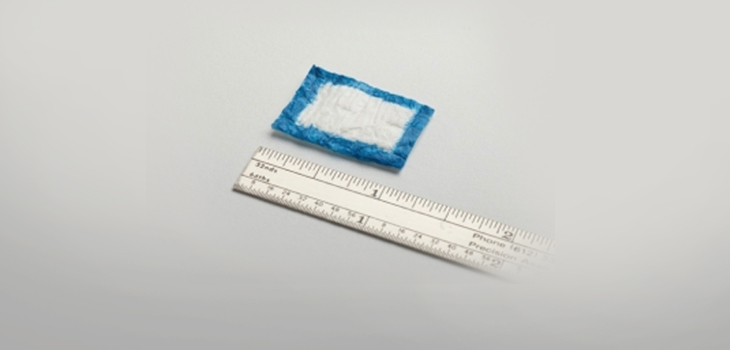
As indicated in the September 7, 2016 news release, “The study assessed the ability of Rotation Medical’s bioinductive implant to induce new tissue formation and limit tear progression when placed on the bursal surface of partial thickness cuff tears. The implant induced significant new tissue formation in all 13 patients by three months (mean increase in tendon thickness 2.2 ± 0.26 mm), and the tissue matured over time and became radiologically indistinguishable from the underlying tendon. No tear progression was observed on MRI in any of the patients during the 24-month post-operative period. All the patients’ Constant and American Shoulder and Elbow Society clinical scores improved significantly over time.”
“Partial-thickness rotator cuff tears frequently enlarge due to increased local strain and often progress to full-thickness tears, ” said Dr. Desmond John Bokor, lead study investigator and associate professor in the Department of Orthopaedic Surgery at Macquarie University in Australia. “The results of this study demonstrate the ability of the bioinductive implant to induce new tendon-like tissue, enabling partial-thickness rotator cuff tears to decrease in size and in most cases disappear. The ability to heal partial-thickness rotator cuff defects, and thus prevent tear propagation and progressive tendon degeneration, represents a novel interventional treatment paradigm for these lesions.”
Martha Shadan, president and CEO of Rotation Medical, told OTW, “Over the next year, we are focused on executing our plan to achieve sustainable and real growth. We have seen very significant success with adoption by physicians in our initial targeted regions, and surgeon utilization is increasing as they see very positive patient response. Our short-term goals are three-fold: to continue to expand our field sales organization to serve additional metro areas across the U.S.; to continue to work with surgeons in their use of our implant across partial, full and massive tears; and to continue to build the base of evidence for our bioinductive implant.”
React:
Discussion
This is a fascinating development. In my practice we've seen similar outcomes with the revised protocol. The key differentiator seems to be patient selection criteria. Has anyone else noticed the correlation with BMI thresholds?
Great point. I'd push back slightly on the conclusion, the sample size in the cited study is too small to draw population-level inferences. That said, the directional signal is compelling and worth a larger RCT.
We implemented a similar approach last year. Early results are promising but we're still gathering 12-month follow-up data. Happy to share our protocol if anyone is interested.
Join the conversation
Orthopedic professionals are discussing this. Sign in and upgrade to read every comment and add your voice.