
But wait, there’s still more.
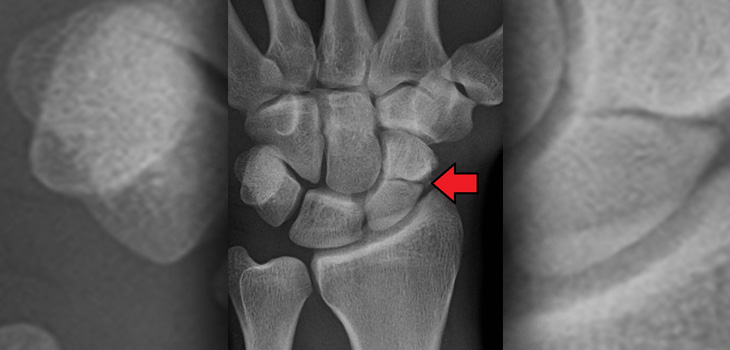
New Study: 1 out of 6 Scaphoid Fractures Are Nonunion
1 min read Premium comments
Secondary
A new study by a national team of orthopedic surgeons examined the health records of 90.1 million patients in search of reasons for nonunion of fractures. What did they learn?
They learned that there was a nonunion rate of 4.93% overall with substantial variation from bone to bone. The lowest nonunion bone rates were in metacarpal at 1.47% and radius at 2.10%. The highest nonunion rates were in scaphoid at 15.46%, tibia + fibula at 13.95%, and femur at 13.86%.
The researchers’ primary interest was in identifying the risk factors that would predict serious complications from bone fractures. The focus was on patients 18 to 63 years old, representing 6, 725 patients with 309, 330 fractures. A major finding was that the presence of other diseases boosted risk. Osteoarthritis, rheumatoid arthritis, and diabetes increased the odds of nonunion by at least 40%. The use of certain medications such as analgesics also upped risk. Other medications turned out to be protective. Antidiabetic medications, (other than insulin, and oral contraceptives) were inversely associated with nonunion.
Nonunion odds increased significantly depending on the number of fractures, the use of prescription analgesics, operative treatment, open fracture, anticoagulant use, osteoarthritis, anticonvulsant use, opioid use, diabetes, high-energy injury, osteoporosis, male gender, insulin use, smoking, obesity, antibiotic use, vitamin D deficiency, diuretic use and kidney insufficiency.
“Understanding key risk factors and their interplay will help us determine which fractures are at greatest risk of nonunion, ” concludes Robert Zura, M.D., professor and head of orthopedics at LSU Health, New Orleans. “We can alter our approach to those and modify those risk factors we can, such as prescription medicines, to improve healing.”
Author
React:
Discussion
This is a fascinating development. In my practice we've seen similar outcomes with the revised protocol. The key differentiator seems to be patient selection criteria. Has anyone else noticed the correlation with BMI thresholds?
Great point. I'd push back slightly on the conclusion, the sample size in the cited study is too small to draw population-level inferences. That said, the directional signal is compelling and worth a larger RCT.
We implemented a similar approach last year. Early results are promising but we're still gathering 12-month follow-up data. Happy to share our protocol if anyone is interested.
Join the conversation
Orthopedic professionals are discussing this. Sign in and upgrade to read every comment and add your voice.