
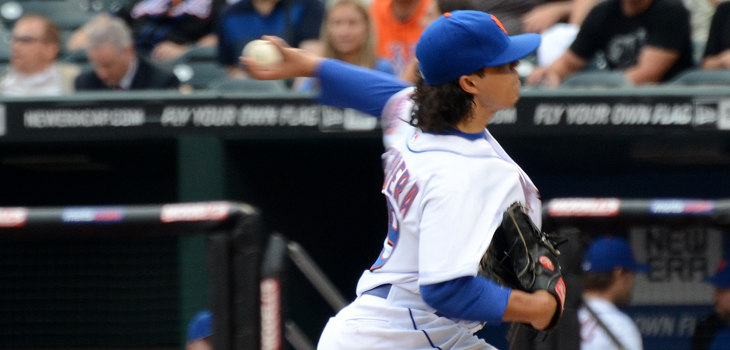
Seeking to clarify things regarding ulnar collateral ligament reconstruction (UCLR), a.k.a., Tommy John Surgery, researchers from Rush University Medical Center dove into the question, “Should we limit the number of innings pitched post-operatively in the MLB (Major League Baseball) pitcher’s first season?”
Limit Postop Innings Pitched? Not Necessary
2 min read Premium comments
Secondary
Some have suggested that doing so would help reduce the chances of pitchers having to undergo a revision UCLR.
According to the August 23, 2016 news release, “The physician-scientists, who included Anthony Romeo, M.D., Nikhil Verma, M.D., Charles Bush-Joseph, M.D., Bernard Bach, M.D., Gregory Cvetanovich, M.D., and Brandon Erickson, M.D., found that the number of innings pitched and number of pitches thrown in the first full season as well as over a player’s career after UCLR are not associated with an increased risk having to undergo a revision UCLR.
“All MLB pitchers between 1974 and 2015 who pitched at least one full season following UCLR were included in the study. They analyzed the recorded pitch counts and innings pitched for the first full season after UCLR, as well as total pitch count and total innings pitched over the pitcher’s entire career. Pitch counts and innings pitched were compared among players who required revision UCLR and those who did not. Of the 154 pitchers in the study, only 19 had to undergo revision UCLR.”
Dr. Romeo explained, “Estimates of return to play are eye-opening. Approximately 20% of MLB players will not achieve their pre-injury level of performance following this surgery, and it takes the ones who do return to their pre-injury level of play an average of 15 months or longer to do so. Preventing a second injury to the elbow is critical as revision surgery is much less successful at returning the pitcher to the same level of play. However, it does not appear that instituting limits on the number of innings pitched after a full return to pitching has an impact on preventing revision UCLR surgery.”
Dr. Bush-Joseph told OTW, “I would expect every team to reassess its expectations on return to play for players undergoing this surgery understanding that every player is different. We continue to look to innovative rehabilitations to help speed the recovery yet avoid the costly re-injury.”
Dr. Verma commented to OTW, “The current study is based on retrospective data which introduces bias in the study which can influence results. As a result, MLB has instituted a prospective data collection system that will allow us to collect information in real time. Obviously determination of volume of pitching and relationship to injury prevention or injury recovery is critical to the health of players and further higher quality data will allow for improved prospective analysis.”
React:
Discussion
This is a fascinating development. In my practice we've seen similar outcomes with the revised protocol. The key differentiator seems to be patient selection criteria. Has anyone else noticed the correlation with BMI thresholds?
Great point. I'd push back slightly on the conclusion, the sample size in the cited study is too small to draw population-level inferences. That said, the directional signal is compelling and worth a larger RCT.
We implemented a similar approach last year. Early results are promising but we're still gathering 12-month follow-up data. Happy to share our protocol if anyone is interested.
Join the conversation
Orthopedic professionals are discussing this. Sign in and upgrade to read every comment and add your voice.