
After 14 years of guiding the American Academy of Orthopaedic Surgeons (AAOS) as chief executive officer, Karen L. Hackett, FACHE, CAE, will leave the position on April 14, 2017.
Karen L. Hackett Leaving AAOS
2 min read Premium comments
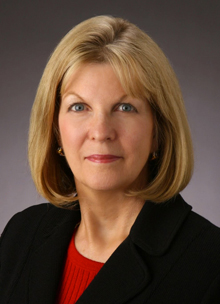
One major project managed by Hackett was the new Orthopaedic Headquarters in Rosemont, Illinois, in 2015. As indicated in the September 21, 2016 news release, “She has worked directly with the AAOS Board of Directors and executive management team to oversee a staff of 250 employees and manage an annual budget of $60 million.”
“Under Hackett’s leadership, the Academy created new quality and performance standards, including guidelines and appropriate use criteria for 18 orthopaedic conditions; hosted an inaugural National Surgical Patient Safety Summit (NSPSS), bringing together 150 representatives from medical professional associations, insurers, health care systems, payers and government agencies to develop surgical care, research and education standards; oversaw numerous legislative and national policy advancements on behalf of orthopaedic surgeons and patients; and fostered ongoing unity among the various orthopaedic specialties and industry stakeholders. In addition, the organization produced yearly, award-winning public service campaigns on injury prevention and safety topics, including distracted driving and walking; a traveling ‘Wounded in Action’ art exhibit; and a website and activities related to the organization’s 75th anniversary.”
“Karen’s leadership has been instrumental to the Academy’s success and growth, ” said AAOS President Gerald R. Williams, Jr., M.D. “Thanks to her bold vision, valuable insight and exceptional dedication, the Academy has created educational programming and new initiatives that continue to support and champion our members, all while navigating unprecedented change in the health care arena.”
Asked about highlights from her tenure at AAOS, Hackett told OTW, “Certainly overseeing the planning, construction and opening of the new Orthopaedic Headquarters in Rosemont, Illinois, was a highlight of my tenure at the Academy. The 180, 000-square foot building, opened in December 2014, houses the American Academy of Orthopaedic Surgeons, more than 25 orthopaedic organizations, and a state-of-the art Orthopaedic Learning Center (OLC).”
“I’m also very proud of the organization’s technological advancements, within the OLC and throughout our educational programs, as well as the creation of new quality, safety and performance measures across a broad range of orthopaedic procedures and specialties.”
When Hackett was asked about a particularly challenging situation, she responded, “Anytime you embark on a construction project the size and scope of the new Orthopaedic Headquarters, there are challenges. However, I think the greatest challenge to the profession of orthopaedics and the Academy over the past decade has been the numerous legislative and regulatory changes in medicine, particularly those dealing with reimbursement. Successfully ensuring that orthopaedics has a unified, strong voice at the table to make certain that these changes are achievable for our members, and most importantly, in the best interest of patients, is an important and ongoing challenge.
“The American Academy of Orthopaedic Surgeons is a strong, unified organization ready to meet the future challenges our members will face, while maintaining an unwavering commitment to orthopaedic patients.”
React:
Discussion
This is a fascinating development. In my practice we've seen similar outcomes with the revised protocol. The key differentiator seems to be patient selection criteria. Has anyone else noticed the correlation with BMI thresholds?
Great point. I'd push back slightly on the conclusion, the sample size in the cited study is too small to draw population-level inferences. That said, the directional signal is compelling and worth a larger RCT.
We implemented a similar approach last year. Early results are promising but we're still gathering 12-month follow-up data. Happy to share our protocol if anyone is interested.
Join the conversation
Orthopedic professionals are discussing this. Sign in and upgrade to read every comment and add your voice.