
Implanet is announcing that it has received a patent from the U.S. Patent and Trademark Office (USPTO) for its JAZZ technological platform. According to the August 30, 2016 news release, “The JAZZ technological platform’s intellectual protection now covers the braided implant and its tensioning system, the principal element of its instrumentation. Implanet now possesses intellectual property architecture covering the specificities of its JAZZ platform in the countries defined as priority markets during the Company’s IPO, i.e. the United States, Europe, China, Japan, Australia and South Africa. Implanet is now the only spine surgery player, apart from Zimmer Spine, to have patents for a spinal fixation technical solution enabling the braid’s tension and the implant’s position on the rod to be locked with a single screw.”
Implanet: Patent Issued for JAZZ
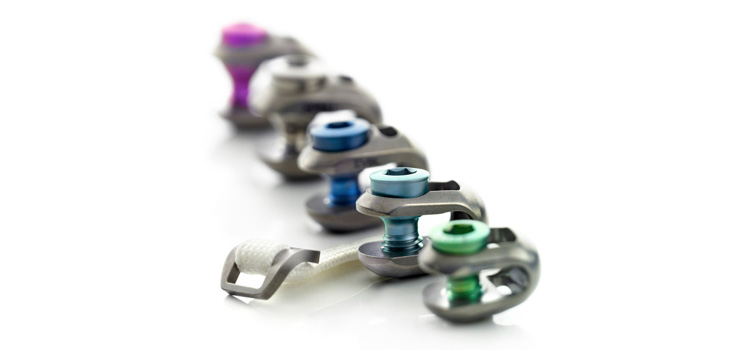
Régis Le Couedic, Implanet’s Product Development & Manufacturing Director, said, “Being granted this patent in the world’s most advanced medical market represents major recognition by the authorities of the pre-eminence and innovative nature of our spine implant technology. This patent is a guarantee of JAZZ’s future in the United States, where surgeons demand increasingly innovative medical technologies. Our band implant and its tensioning instrument are now protected in our priority markets, and we will continue to extend our field of protection to other innovations currently in late-stage development.”
Implanet CEO Ludovic Lastennet told OTW, “The grant of this patent is a major milestone for Implanet. This strong protection will strengthen further collaboration with surgeons in the development of our JAZZ product range extension by using the protected key features of our band technology platform to address more spinal surgical indications.”
Discussion
This is a fascinating development. In my practice we've seen similar outcomes with the revised protocol. The key differentiator seems to be patient selection criteria. Has anyone else noticed the correlation with BMI thresholds?
Great point. I'd push back slightly on the conclusion, the sample size in the cited study is too small to draw population-level inferences. That said, the directional signal is compelling and worth a larger RCT.
We implemented a similar approach last year. Early results are promising but we're still gathering 12-month follow-up data. Happy to share our protocol if anyone is interested.
Join the conversation
Orthopedic professionals are discussing this. Sign in and upgrade to read every comment and add your voice.