
By pairing graphene nanoribbons with a certain polymer, Rice University researchers have found a method that could one day heal damaged spinal cords. Led by chemist James Tour, Ph.D., the researchers have developed a material dubbed Texas-PEG that could treat damaged or even severed spinal cords.
Graphene Nanoribbons+Polymer=Spinal Cord Healing?
2 min read Premium comments
Secondary
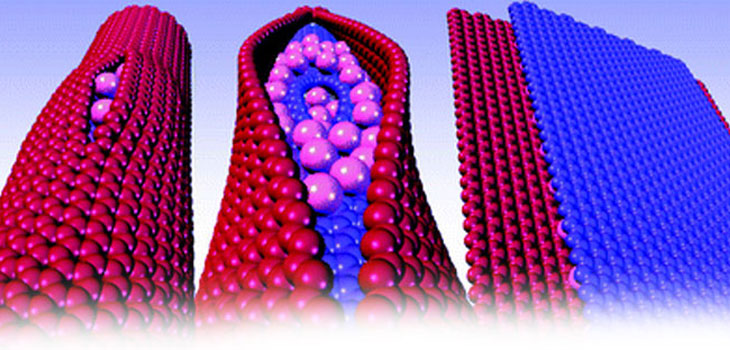
As indicated in the September 19, 29016 news release, “Graphene nanoribbons customized for medical use by William Sikkema, a Rice graduate student and co-lead author of the paper, are highly soluble in polyethylene glycol (PEG), a biocompatible polymer gel used in surgeries, pharmaceutical products and in other biological applications. When the biocompatible nanoribbons have their edges functionalized with PEG chains and are then further mixed with PEG, they form an electrically active network that helps the severed ends of a spinal cord reconnect.”
“We’re not the only lab that has demonstrated neurons growing on graphene in a petri dish, ” Dr. Tour said. “The difference is other labs are commonly experimenting with water-soluble graphene oxide, which is far less conductive than graphene, or nonribbonized structures of graphene.”
As stated in the news release, “Texas-PEG succeeded in restoring function in a rodent with a severed spinal cord in a procedure performed at Konkuk University in South Korea by co-authors Bae Hwan Lee and C-Yoon Kim. Tour said the material reliably allowed motor and sensory neuronal signals to cross the gap 24 hours after complete transection of the spinal cord and almost perfect motor control recovery after two weeks.”
“Kim, co-primary author of the paper, is a research professor in the Department of Stem Cell Biology, School of Medicine, Konkuk University, Seoul, South Korea, and a researcher at Seoul National University. Lee is an associate professor of physiology at the Yonsei University College of Medicine, Seoul.”
Dr. Tour told OTW, “For years we have been exploring the growth of neurons, and spinal cord tissue in particular, along the conductive single-atom thick sheets of graphene. When we saw the opportunity to merge it with a fusogen, we tried. It worked.
“Spinal cord repair can be facilitated by a simple few drops of Texas-PEG to a damaged area, promoting re-growth across severed segments.
“When working on spinal columns, or nerve tissue, this technique could speed and promote recovery of damaged tissue. Much work remains to be done, but since this is likely going to be characterized as a device (non-systemic), progress should be faster.”
React:
Discussion
This is a fascinating development. In my practice we've seen similar outcomes with the revised protocol. The key differentiator seems to be patient selection criteria. Has anyone else noticed the correlation with BMI thresholds?
Great point. I'd push back slightly on the conclusion, the sample size in the cited study is too small to draw population-level inferences. That said, the directional signal is compelling and worth a larger RCT.
We implemented a similar approach last year. Early results are promising but we're still gathering 12-month follow-up data. Happy to share our protocol if anyone is interested.
Join the conversation
Orthopedic professionals are discussing this. Sign in and upgrade to read every comment and add your voice.