
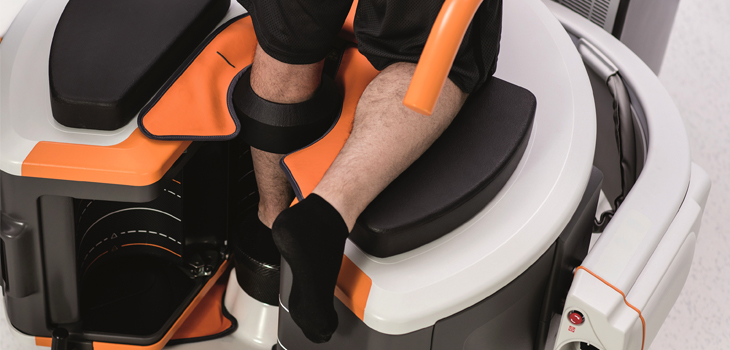
A cone beam 3D imaging system, made by Carestream and used to capture data by means of weight-bearing and other types of extremity exams, has received FDA 510(k) clearance and will now be available for order in the United States. The On Sight 3D Extremity System is based on 20 patents and was five years in development by research scientists and engineers. The device is approved for X-ray computed tomography and projection X-ray imaging of upper and lower extremities of adult patients and children over the age of 12.
FDA Clears Carestream 3D Imaging System
1 min read Premium comments
Secondary
The Carestream imaging system is the second to be introduced in the U.S. market. The manufacturer reports that the Carestream device contains a patient access door so patients can easily step into the system for weight bearing exams. According to a spokesman, the system offers lower-dose imaging but with excellent high resolution results than other devices and data is displayed on a large screen which helps the physician see sites of interest with one scan.

“Our extremity imaging system can help in treating a host of orthopaedic conditions that affect the biomechanical behavior of the joints such as arthritis, meniscus loss, instability and malalignment syndromes, ” said Helen Titus, Carestream’s Worldwide Marketing Director for Ultrasound & CT Solutions. “This new system offers less radiation than traditional CT systems while delivering excellent image quality.”
Pricing will be 372, 000 for a typical configuration. The system uses standard electrical power and offers minimal room shielding requirements, which makes this system very affordable to install and maintain. The system will begin shipping by the end of 2016.
The company believes that sports medicine clinics, hospitals and orthopedic providers equipped with the new extremity imaging system will be able to conduct patient consultations in one visit as patients will immediately be able to see a 3D image of their condition and better understand the treatment.
For more information: www.carestream.com/onsight.
Author
React:
Discussion
This is a fascinating development. In my practice we've seen similar outcomes with the revised protocol. The key differentiator seems to be patient selection criteria. Has anyone else noticed the correlation with BMI thresholds?
Great point. I'd push back slightly on the conclusion, the sample size in the cited study is too small to draw population-level inferences. That said, the directional signal is compelling and worth a larger RCT.
We implemented a similar approach last year. Early results are promising but we're still gathering 12-month follow-up data. Happy to share our protocol if anyone is interested.
Join the conversation
Orthopedic professionals are discussing this. Sign in and upgrade to read every comment and add your voice.