
An innovative new study from the University of Vermont (UVM) has confirmed that the relationship between pain and anxiety disorders exists and it is highly significant.
Commentary: The Link between Pain and Anxiety Disorders
4 min read Premium comments
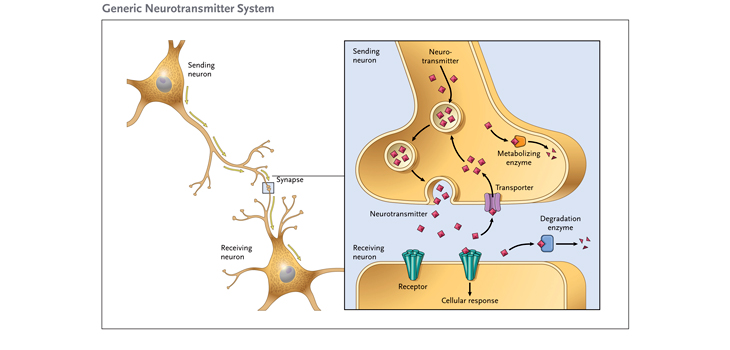
This relationship between psychological anxiety and physical pain has been studied for a long time and certainly physicians routinely see it in their practice. But actually finding the connection between pain and anxiety has eluded researchers. We see it, but we don’t have clear, definitive explanations for why the connection exists or the physiology behind its occurrence.
So this University of Vermont study is very interesting. The researchers found that when an individual is experiencing psychological stress the human body releases a peptide neurotransmitter PACAP, which is also the same peptide neurotransmitter released when physical, neuropathic pain is felt.
Study Citation: Parabrachial PACAP Activation of Amygdala Endosomal ERK Signaling Regulates the Emotional Component of Pain. Biological Psychiatry, August 2016 DOI: 10.1016/j.biopsych.2016.08.025
Dr. Victor May, a professor of neurological sciences at University of Vermont led the study which examined the expression of the PACAP (pituitary adenylate cyclase activating polypeptide) along the nervous system’s pathways to the brain, known as the spino-parabrachiomygdaloid tract. This pathway leads from the spinal cord and travels towards the amygdala, the part of the brain which processes emotional behavior. The results of the study were published in a journal article in Biological Psychiatry.
Researchers used models to trace the PACAP neurocircuits and observed that PACAP was released by the body as a response to both neuropathic pain and psychological anxiety. The Vermont team also found that these pathways intersected, indicating the existence of a biological connection between chronic pain and anxiety.
Dr. May, the lead researcher in the study said, “Chronic pain and anxiety-related disorders frequently go hand-in-hand”, speaking of how the results of the newest study supported the conclusions from his previous research conducted in 2011, during which it was found that that PACAP was profoundly expressed in women having PTSD [post-traumatic stress disorder] symptoms.
May and his research team also found that when a PACAP receptor antagonist was connected, pain hypersensitivity and anxious behavior were extensively reduced.
The University of Vermont researchers concluded that by focusing on this pathway and a regulator that clinicians now have the potential to treat anxiety disorders and chronic pain with a completely new approach without resorting solely on medication. By fitting anxiety and stress within the models of chronic pain they found a direct biological connection between chronic pain and anxiety disorders—PACAP, peptide neurotransmitter, the same peptide neurotransmitter released when an individual experiences psychological stress or neuropathic pain. This observation opens doors to many new ways in which both psychological and physical pain can be treated without using drugs.
Current treatment paradigms for stress, anxiety or symptoms of physical pain often rely on benzodiazepines, sedatives, and other nervous system depressants. The United States Food and Drug Administration (FDA) have issued strong warnings against combining the benzodiazepines and opioid painkillers—despite the fact that these are frequent treatments for patients having symptoms of both anxiety and chronic pain.
Several other research studies have been conducted in the past to examine the connection between chronic pain and disorders relating to psychological stress and anxiety. A study by De Heer et al. (2014) concluded that there is a direct relationship between depression, anxiety and pain, presenting that patients who have more disabling pain are more likely to suffer from severe depression. Another study conducted at Northwestern University showed that whether the patient was experiencing physical pain or psychological stress, the same areas of the brain lit up, actually leading to changing of the wiring from previously positive feelings. This study showed that there was a biological connection between pain and anxiety, however did not explain the exact connection.
With the findings of the newest research by May et al., we specifically see that it is the same neurotransmitter that is responsible for the expressions of both physical pain and anxiety.
It does not surprise me that there is a biological relationship between pain and anxiety, as the very definition of pain entails to have both a physical and an emotional aspect. Pain is a negative feeling, so it is natural that the body would release the same neurotransmitters to cause a negative emotion.
In my practice, I have always evaluated the state of my patients’ emotional “level, ” and noticed that patients who suffer from chronic pain are also very likely to suffer from depression or anxiety.
I would encourage further research into these highly significant connections in the hope that it may lead to safer and more effective treatment methods for both neuropathic pain and psychological anxiety.
I would finally note that the research conclusions did not differentiate whether the patient with neuropathic pain expressed the neuropeptide, or because of the expression of the neuropeptide did the patient develop neuropathic pain. It would also be highly interesting to know the type of neuropathic pain the patient experienced whether it was from metabolic disturbances like diabetes or infectious related like HIV neuropathy, or whether the neuropathic pain was from a peripheral nerve problem.
Author’s Information: Dr. Didier Demesmin, M.D. is an Interventional Pain Medicine Specialist who is double Board Certified in Anesthesiology and Pain Medicine. He is the president and founder of University Pain Medicine Center. He graduated from Robert Wood Johnson Medical School, where he received the prestigious award for Academic Excellence in Anesthesiology. He completed an Interventional Pain Medicine Fellowship Program at Columbia University, College of Physicians and Surgeons/St. Luke’s-Roosevelt Medical Center in New York. Dr. Demesmin is affiliated with some of the finest hospitals in Central New Jersey, including Saint Peter’s University Hospital, Robert Wood Johnson University Hospital, JFK Medical Center, and Somerset Medical Center.
Author
React:
Discussion
This is a fascinating development. In my practice we've seen similar outcomes with the revised protocol. The key differentiator seems to be patient selection criteria. Has anyone else noticed the correlation with BMI thresholds?
Great point. I'd push back slightly on the conclusion, the sample size in the cited study is too small to draw population-level inferences. That said, the directional signal is compelling and worth a larger RCT.
We implemented a similar approach last year. Early results are promising but we're still gathering 12-month follow-up data. Happy to share our protocol if anyone is interested.
Join the conversation
Orthopedic professionals are discussing this. Sign in and upgrade to read every comment and add your voice.