
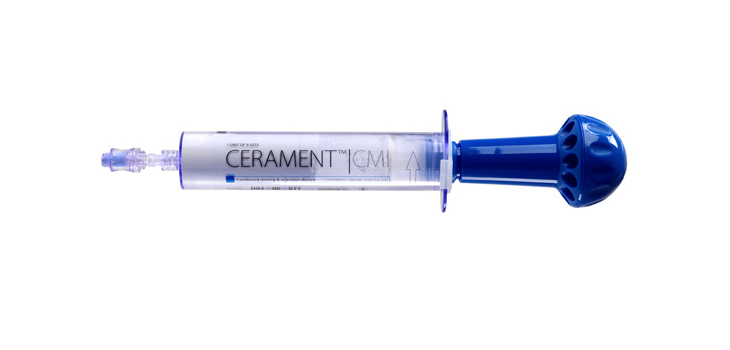
Initial promising results for those with bone infection. BONESUPPORT AB is announcing the publication of results from the first 100 patients in a study on CERAMENT G in patients with chronic osteomyelitis using a single stage surgical procedure. The prospective study, published in The Bone and Joint Journal, evaluated CERAMENT G for dead space management in these patients.
CERAMENT G Effective in Osteomyelitis
2 min read Premium comments
Secondary
According to the September 1, 2016 news release, using a single stage surgical procedure with CERAMENT G was found to be highly effective, delivering a 96% prevention of infection recurrence rate, a 3.0% fracture rate and a total wound leakage rate of 6.0%.
CERAMENT G provides “an initial targeted ultra-high concentration of gentamicin into the bone defect and then a longer sustainable dose above the minimal inhibitory concentration (MIC) of the bacteria that initially caused the osteomyelitis. This unique antibiotic-eluting profile helps protect the bone healing process and promote bone remodeling.”
“…It is able to fill the void completely due to its injectibility and to provide initial structural stability due to its self-setting properties. The use of CERAMENT G to deliver gentamicin locally could play an important role in improving antibiotic stewardship in hospitals by increasing compliance and reducing the need for patients with chronic osteomyelitis to receive long term systemic antibiotics.”
Richard Davies, CEO of BONESUPPORT, told OTW, “The study is important in highlighting that CERAMENT G allows the more effective management of osteomyelitis, preventing repeated operations and recurrent infections. The only dedicated bone infection unit in the UK cited that it will become the mainstay of dead space management, given the major clinical and health economic benefits that the use of CERAMENT G provides. In the U.S. we believe that CERAMENT G, when approved, has the potential to play a key role in clinical protocols, in light of the migration to bundled payment systems: one payment per episode of care, including hospital readmissions. Surgical site infection is the number one reason for readmissions, the financial burden of which are the responsibility of the hospital. We believe that CERAMENT G could offer a very compelling clinical value proposition if the planned FORTIFY study can demonstrate infection reduction in patients being treated for tibial fractures when used prophylactically.”
Author
React:
Discussion
This is a fascinating development. In my practice we've seen similar outcomes with the revised protocol. The key differentiator seems to be patient selection criteria. Has anyone else noticed the correlation with BMI thresholds?
Great point. I'd push back slightly on the conclusion, the sample size in the cited study is too small to draw population-level inferences. That said, the directional signal is compelling and worth a larger RCT.
We implemented a similar approach last year. Early results are promising but we're still gathering 12-month follow-up data. Happy to share our protocol if anyone is interested.
Join the conversation
Orthopedic professionals are discussing this. Sign in and upgrade to read every comment and add your voice.