
“Any customer can have a car painted any color that he wants so long as it is black.” – Henry Ford to his sales people in 1909.
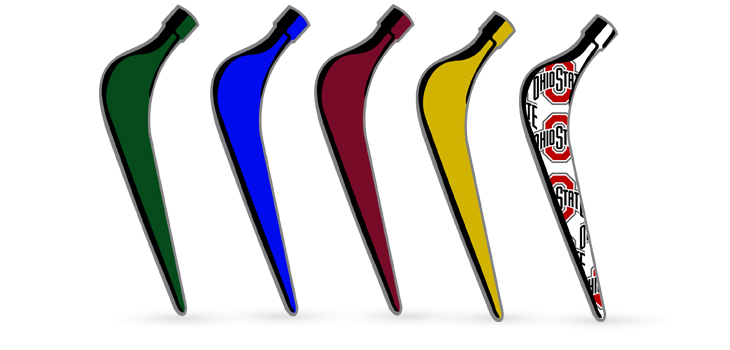
You Want that Hip in Jungle Green or Sapphire Blue?
4 min read Premium comments
Ford, the founder of the modern automobile industry went on to say:
“There is a tendency to keep monkeying with styles and to spoil a good thing by changing it. The salesmen were insistent on increasing the line. They listened to the 5 per cent., the special customers who could say what they wanted, and forgot all about the 95 per cent who just bought without making any fuss. No business can improve unless it pays the closest possible attention to complaints and suggestions. If there is any defect in service then that must be instantly and rigorously investigated, but when the suggestion is only as to style, one has to make sure whether it is not merely a personal whim that is being voiced. Salesmen always want to cater to whims instead of acquiring sufficient knowledge of their product to be able to explain to the customer with the whim that what they have will satisfy his every requirement—that is, of course, provided what they have does satisfy these requirements.”
We digress into color because an interesting announcement came flying across the desk recently from the Foster Corporation.
The Foster Corporation, which is based in the very quaint New England town of Putnam, Connecticut (antique capital of New England, population 9, 584), announced that it had a new line of medical grade color concentrates using FDA 21CFR 73 subpart D pigments for medical device applications.
And that got us thinking.
Color…what can we do with color?
MediBatch™ Color Concentrates
MediBatch™ is Foster Corporations new line of color concentrates which have been specifically developed for medical applications. Using MediBatch orthopedic device manufacturers can create custom colored components.

Here are the colors you can use either alone or blended.
White, Cool Gray, Slate Gray, Black, Powder Blue, Royal Blue, Sapphire Blue, Mint Green, Sea Green, Jungle Green, Lavender, Iris, Golden Yellow or Violet.
For branding. Aesthetics. Or functional purposes.
OK, we think MediBatch could actually change the way that color is used in orthopedics.
Seriously.
Here’s what Dan Lazas, a marketing consultant for Foster told OTW when we called him on the phone as asked about MediBatch:
“With the increase in home healthcare, we are seeing more interest in aesthetics and devices that are appealing outside of the hospital setting. With the aging population, we are seeing more applications of color for devices that could help patients comply with their medical care recommendations. I can see where it might be appealing for patients to have these devices available in multiple colors.
“Color provides options for manufacturers and allows for greater variety. If physicians know what the pigment options are, they can provide that feedback to the device manufacturers. Which colors provide the perception of value and make people want to use their device more, make it more appealing or visually comfortable? That question may drive the next wave of application for these colors as they relate to FDA regulated devices.”
Examples, Please
While choosing a color is certainly and unapologetically important for aesthetic reasons (hello!) it also adds functionality and branding to devices. “The FDA 21CFR73 Subpart D regulations address pigments used in sutures, contact lenses, intraocular lenses and one bone implant, ” said Lazas. “Using colors in these applications can help doctors see sutures and differentiate between types of surgical equipment or manufacturers’ brands.”
Here are some examples.

The FDA’s Rules About Color
Color concentrates, blended with unpigmented polymers are widely used as an economical alternative to pre-colored formulations for injection molded or extruded plastic components. Pigments used for device components that contact the human body, such as catheter tubing, require documentation to be submitted as part of device approval by the FDA. Use of pigments that have been previously evaluated for use in medical devices may reduce the FDA review time for a new device and expedite the approval process.
MediBatch color concentrates are formulated using FDA 21CFR 73 Subpart D listed pigments and a polymer carrier that is compatible with a wide range of base resins, including nylons and polyurethanes. Twelve standard concentrates, including green, red, yellow, blue, violet, black and white, are available from stock in 1, 5 and 10 pound quantities. Custom colored concentrates are also available on a made to order basis.
“MediBatch color concentrates were specifically created with medical device product development in mind. By using FDA 21CFR 73 Subpart D pigments and packaging in small quantities they are ideal for use in early stage development and prototyping operations, ” said Alicia Bergeron, Regulatory, Safety and Environmental Manager. “Single pound quantities available from stock can pigment up to 25 pounds of natural polymer, and allow for engineers to rapidly prototype new components without the need to purchase large amounts of material.”
For more information, give Foster a call. Even better, go visit. Putnam is a great place to visit, especially in the fall during the The Great Pumpkin Festival.
The colors are beautiful.
Author
React:
Discussion
This is a fascinating development. In my practice we've seen similar outcomes with the revised protocol. The key differentiator seems to be patient selection criteria. Has anyone else noticed the correlation with BMI thresholds?
Great point. I'd push back slightly on the conclusion, the sample size in the cited study is too small to draw population-level inferences. That said, the directional signal is compelling and worth a larger RCT.
We implemented a similar approach last year. Early results are promising but we're still gathering 12-month follow-up data. Happy to share our protocol if anyone is interested.
Join the conversation
Orthopedic professionals are discussing this. Sign in and upgrade to read every comment and add your voice.