
Gathering more and more data, Vertical Spine, LLC has now announced the achievement of a key milestone with the 1000th case performed using its FIBRINET System technology.
Vertical Spine: 1000th Case Using FIBRINET
2 min read Premium comments
Secondary
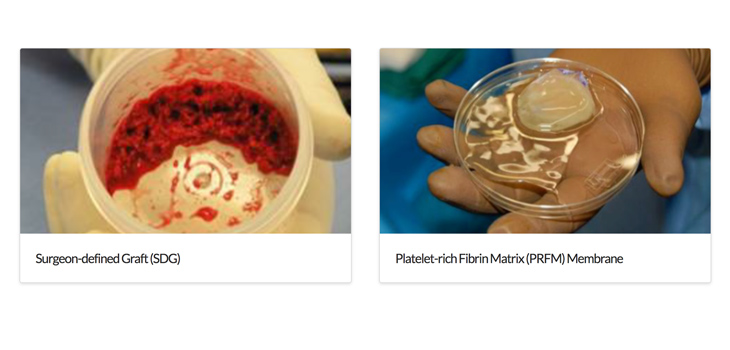
As indicated in the August 1, 2016 news release, “The FIBRINET System is a self‐contained, disposable kit that is used to harness and concentrate the patient’s own platelets and associated growth factors into a Platelet‐Rich Fibrin Membrane (PRFM) graft. In addition, fluid Platelet‐Rich Fibrin Gel is produced and mixed with bone grafting material, as defined by the surgeon, for improved handling characteristics.”
“The management team and our Board of Directors believe that biologics is the future of spine fusion surgery, and our company’s ability to provide an easy solution supported with published clinical data will be the key to success for future growth, ” said Vertical Spine Chairman and CEO Tom Crowley. “Our first two spine fusion studies, using the FIBRINET System, resulted in 100% radiographic fusion without any complications. A third study was recently submitted for publication, and two additional studies will be submitted later this year.”
Tom Crowley told OTW, “Surgeons are more willing to reconsider biologic solutions as new data becomes available. Early on, platelet concentrates didn’t perform well in spine fusion surgery. The technology was promising but early systems were inefficient, the kits were not optimized and all systems required mixing with an activator prior to implantation so the liquid platelets would form into a gel and stay at the surgery site. Years later, a study by Han et al. in the Journal of Bone and Joint Surgery 2009 showed concentrated platelets can heal bone however, if mixed with an activator like bovine thrombin, would rupture the platelets on contact and release all the growth factors at once which inhibited bone healing in that animal model. Once surgeons understood the differences between early generations and our fourth generation product that creates a platelet rich fibrin membrane (PRFM) graft without thrombin, they were willing to evaluate the FIBRINET System. Built on a foundation of good basic science published in peer-reviewed journals, we worked with physicians at the Hospital for Special Surgery (HSS) to conduct posterior lumbar fusion (PLF) studies to show the technology can translate from the lab to the operating room. Now that our third study is completed and submitted with two additional studies in process, we feel the data will continue to support our technology and provide evidence-based solutions to the orthopedic community.
“We would like orthopedic surgeons to know that spine fusion success doesn’t solely rely on metal constructs providing structural support. Fusion is a biologic process and our technology provides surgeons with the ability to harness the full and natural array of autologous growth factors from concentrated platelets into a fibrin membrane graft that can be delivered directly to the fusion site without using excess activators like bovine thrombin.”
React:
Discussion
This is a fascinating development. In my practice we've seen similar outcomes with the revised protocol. The key differentiator seems to be patient selection criteria. Has anyone else noticed the correlation with BMI thresholds?
Great point. I'd push back slightly on the conclusion, the sample size in the cited study is too small to draw population-level inferences. That said, the directional signal is compelling and worth a larger RCT.
We implemented a similar approach last year. Early results are promising but we're still gathering 12-month follow-up data. Happy to share our protocol if anyone is interested.
Join the conversation
Orthopedic professionals are discussing this. Sign in and upgrade to read every comment and add your voice.