
BONESUPPORT, a biotech company located in the Ideon Science Park at Lund, Skåne, Sweden has received approval from the U.S. Food and Drug Administration (FDA) to begin an Investigational Device Exemption (IDE) study of its product CERAMENT G.
Trial to Study Ultra-High Antibiotic Bone Graft Substitute CERAMENT G
1 min read Premium comments
Secondary
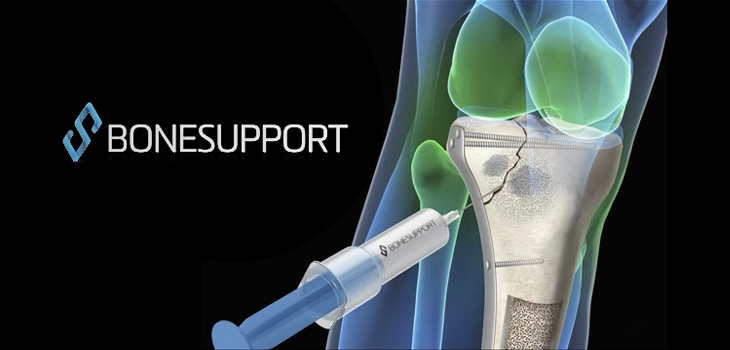
According to the manufacturer, CERAMENT G combines the bone healing and bone remodeling properties of CERAMENT with the antibiotic, gentamicin. CERAMENT G’s drug-eluting properties enable it to provide an initial ultra-high concentration of gentamicin to the environment of the bone fracture and then a longer sustainable dose above the minimum inhibitory concentration of many of the bacteria which could cause a deep bone infection at the fracture site. This antibiotic-eluting profile, its makers claim, helps protect the bone healing process and promotes bone remodeling. The product is an injectable antibiotic-eluting bone graft substitute that provides local sustained delivery of gentamicin. CERAMENT G received CE mark approval in February 2013 and is now marketed in 19 countries outside the U.S.
The study, which is called the FORTIFY study, will be a randomized multicenter controlled trial designed to evaluate the safety and efficacy of CERAMENT G as part of surgical repair of open diaphyseal tibial fractures.
The trial is planned to enroll up to 230 patients at up to 30 centers globally. Study directors plan for at least 50% of the study data to come from subjects in the United States. Besides evaluating the safety of CERAMENT G, goals of the study include the absence of deep infection at the fracture site and the absence of secondary procedures (surgical or nonsurgical) intended to promote fracture union. BONESUPPORT anticipates starting the FORTIFY trial by the end of 2016.
BONESUPPORT AB was founded in 1999 by Lars Lidgren, M.D., Ph.D., Professor of Orthopedic Surgery and Academic Head of Department at Lund University Hospital in Sweden which is a member of the ISOC group of global leading orthopaedic centers. The firm is one of the largest ventures in the Swedish medical technologies industry.
Author
React:
Discussion
This is a fascinating development. In my practice we've seen similar outcomes with the revised protocol. The key differentiator seems to be patient selection criteria. Has anyone else noticed the correlation with BMI thresholds?
Great point. I'd push back slightly on the conclusion, the sample size in the cited study is too small to draw population-level inferences. That said, the directional signal is compelling and worth a larger RCT.
We implemented a similar approach last year. Early results are promising but we're still gathering 12-month follow-up data. Happy to share our protocol if anyone is interested.
Join the conversation
Orthopedic professionals are discussing this. Sign in and upgrade to read every comment and add your voice.