
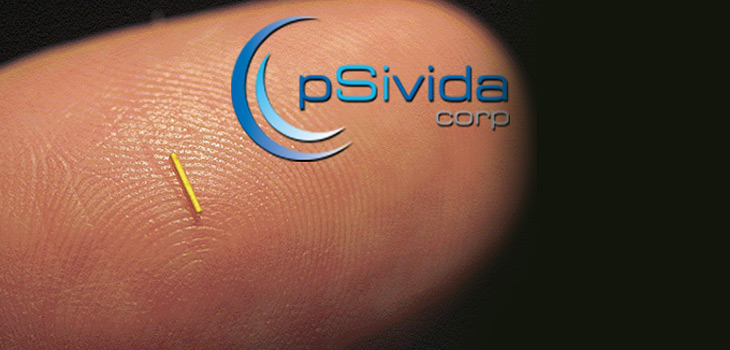
The pSivida Corporation and Hospital for Special Surgery, New York, are initiating an investigation into a sustained–release implant to treat severe knee osteoarthritis. According to the August 1, 2016 news release, the implant device is designed to provide long-term pain relief for patients with severe knee osteoarthritis. Physicians will implant the device into the non-articulating part of the knee during an outpatient procedure.
Steroid Infusion Implant Tested at HSS
1 min read Premium comments
Secondary
Researchers will evaluate the implant for six months. Pain relief after a single treatment is expected to extend for up to one year or more. The open-label, single-dose, safety and tolerability study will assess the ability of the implant to administer dexamethasone. Each of the six patients in the study will have the device implanted in one knee. Each week, investigators will assess change from baseline in mean of pain intensity scores at rest, with activity and at night through 24 weeks.
“We believe this product has the potential to provide long-term pain relief and to contribute to improved joint function for patients with severe osteoarthritis, which can delay knee replacement surgery, ” said Robert N. Hotchkiss, M.D., medical director of clinical research at Hospital for Special Surgery.
“Implanting a small, secure reservoir that delivers a corticosteroid on a sustained basis directly to the knee could avoid the issues with systemic steroid delivery and repetitive knee injections. This implant, the result of the combined insights [from] HSS and the expertise of pSivida, has the potential to create a paradigm shift in a variety of conditions.”
Author
React:
Discussion
This is a fascinating development. In my practice we've seen similar outcomes with the revised protocol. The key differentiator seems to be patient selection criteria. Has anyone else noticed the correlation with BMI thresholds?
Great point. I'd push back slightly on the conclusion, the sample size in the cited study is too small to draw population-level inferences. That said, the directional signal is compelling and worth a larger RCT.
We implemented a similar approach last year. Early results are promising but we're still gathering 12-month follow-up data. Happy to share our protocol if anyone is interested.
Join the conversation
Orthopedic professionals are discussing this. Sign in and upgrade to read every comment and add your voice.