
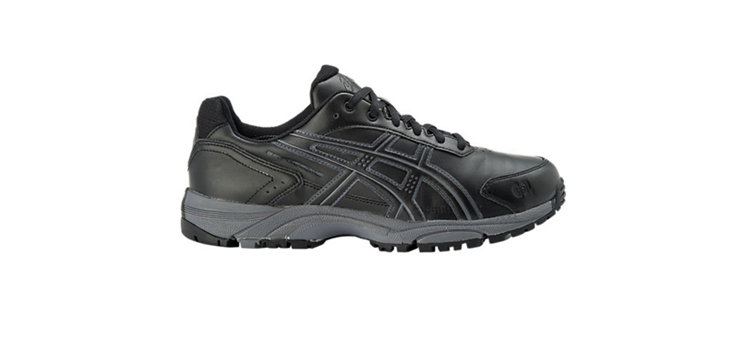
How effective are shoes defined and marketed as being “unloading” in reducing pain from arthritic knees? Not very, according to a study of one brand—the “Gel Melbourne OA” shoe by Asics—that was conducted by Rana Hinman, Ph.D., professor of physiotherapy at the University of Melbourne. The study findings, published in Annals of Internal Medicine, concluded that special shoes were no better for knee arthritis sufferers than are standard lace-up footwear.
Special Shoes No Help for Arthritis Victims
1 min read Premium comments
Secondary
The study focused on 160 knee arthritis patients who were aged 50 years old and up. Half of the participants were assigned to wear the Asics Gel Melbourne OA unloading shoe which retails in Australia for roughly $135 U.S. dollars. The other half wore a conventional Asics shoe with no unloading features. Unloading shoes aim to reduce the force (or “load”) placed on an affected knee joint.
According to the manufacturer, unloading shoes are equipped with stiffer-than-normal soles, and shock-absorbing inserts. The goal is to reduce overall knee load by repositioning the foot while walking toward an inward roll (pronation). “With its specific design features, [the unloading shoe] does significantly reduce the forces acting across the inner compartment of the knee joint, ” said Hinman.
For six months the participants wore either the Asics Gel Melbourne OA unloading shoe or a conventional Asics shoe with no unloading features. After half a year, 54% of each group experienced “improved pain” levels. Forty-eight percent in the conventional shoe group said physical function had improved versus 44% of those wearing the unloading shoes.
Since, both types of shoes led to significant pain relief and improved physical function for arthritis sufferers, Hinman wondered, at the end of the study, if new, supportive lace-up shoes should not be the recommended footwear for all walkers.
Author
React:
Discussion
This is a fascinating development. In my practice we've seen similar outcomes with the revised protocol. The key differentiator seems to be patient selection criteria. Has anyone else noticed the correlation with BMI thresholds?
Great point. I'd push back slightly on the conclusion, the sample size in the cited study is too small to draw population-level inferences. That said, the directional signal is compelling and worth a larger RCT.
We implemented a similar approach last year. Early results are promising but we're still gathering 12-month follow-up data. Happy to share our protocol if anyone is interested.
Join the conversation
Orthopedic professionals are discussing this. Sign in and upgrade to read every comment and add your voice.