
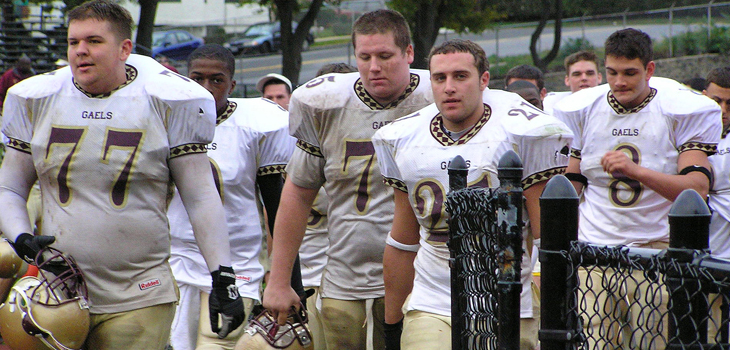
Does participation in student athletics protect young participants from high blood pressure and obesity? According to a recent study published in the Journal of Pediatrics, it does not. Researchers at Thomas Jefferson University found the same rates of obesity and high blood pressure readings in student-athletes as would be expected in the general, non-sports playing adolescent population.
Participation in Sports No Cure for Obesity, High Blood Pressure
1 min read Premium comments
Secondary
The study grew out of work done by the Athlete Health Organization, a non-profit organization that provides free pre-participation evaluations of student-athletes in Philadelphia each year. Examinations are conducted before the start of the season to identify students who might be at risk for injury, illness or death. Volunteer physicians provide a physical exam including an electrocardiogram. Over a period of four years, the organization has provided physicals to over 2, 700 athletes and caught life-threatening conditions in a handful of students.
“We founded the Athlete Health Organization to promote safe sports activity but we can also use these events to evaluate the overall health of this population, ” said David Shipon, M.D., CEO of Athlete Health Organization and a cardiologist at Thomas Jefferson University Hospitals. “This is our first research study and we found alarmingly high rates of obesity and high blood pressure readings among adolescent student-athletes.”
Among the team’s finding were the fact that 20% of participants were overweight, 24% were obese and 14.8% had higher than normal blood pressure readings. The students’ body mass index correlated strongly with high blood pressure readings. The researchers found that the numbers were comparable to the general adolescent population.
“Although the general presumption is that athletics and activity should help with weight and blood pressure control, our study suggests that student-athletes in Philadelphia are suffering from these conditions at the same alarming rate as their peers who do not sign up for school sports, ” said Jill Kropa, M.D., first author and sports medicine fellow at Thomas Jefferson University.
Author
React:
Discussion
This is a fascinating development. In my practice we've seen similar outcomes with the revised protocol. The key differentiator seems to be patient selection criteria. Has anyone else noticed the correlation with BMI thresholds?
Great point. I'd push back slightly on the conclusion, the sample size in the cited study is too small to draw population-level inferences. That said, the directional signal is compelling and worth a larger RCT.
We implemented a similar approach last year. Early results are promising but we're still gathering 12-month follow-up data. Happy to share our protocol if anyone is interested.
Join the conversation
Orthopedic professionals are discussing this. Sign in and upgrade to read every comment and add your voice.