
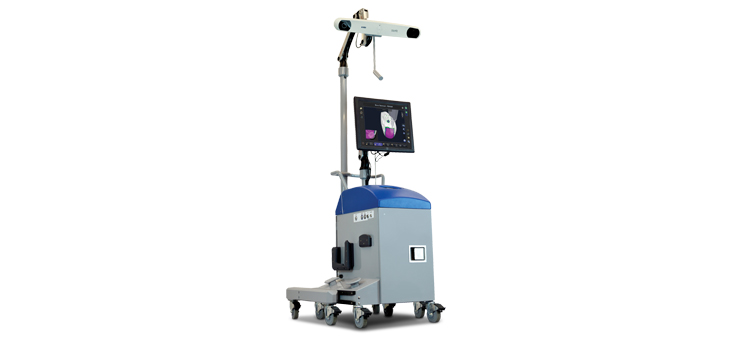
Smith & Nephew plc has announced the first surgical case of its robotics-assisted total knee replacement procedure, performed by Brian McGinley, M.D. at the John T. Mather Memorial Hospital in Port Jefferson, New York. The new approach recently received 510(k) clearance from the FDA, and uses the NAVIO Surgical System to implant the JOURNEY II BCS and CR total knee systems.
NAVIO Used in Smith & Nephew Knee System
2 min read Premium comments
Secondary
Dr. McGinley commented in the July 28, 2016 news release, “The handheld robotics-assisted NAVIO platform provided me a precise and efficient placement of the JOURNEY II BCS. I was delighted to see how seamlessly it integrated into our workflow.”
As indicated in the news release, “During a total knee replacement surgery, the NAVIO system is designed to deliver consistent and accurate results through the utilization of a robotics-assisted hand piece, navigation and NAVIO specific cut guides, all of which enable better patient outcomes. The NAVIO intra-operative planning software uses 3D surface capture to predict joint laxity, enable precise implant positioning, and customize a solution for each patient. Unlike other robotics-assisted platforms, the NAVIO system does not require a pre-operative CT scan.”
“We’re excited to introduce the combination of our NAVIO Surgical System and the JOURNEY II total knee system to the orthopaedic community, ” said Mike Donoghue, Senior Vice President of Global Marketing for Orthopaedics at Smith & Nephew. “Surgeons now have access to a highly portable, robotics-assisted technique that marks the next step in Smith & Nephew’s pioneering approach to joint reconstruction. This cost-effective procedure positions us particularly well in the US market, where bundled payments and ambulatory surgery centers have shifted focus to the economic feasibility and overall value of new technology for joint replacement procedures.”
Asked about the most challenging part leading up to this case, Donoghue told OTW, “It was challenging to create an intuitive surgical interface, where the benefits of robotic-assisted surgery can be leveraged to enhance the surgical experience without disruption of the normal surgical workflow.”
“NAVIO Robotics assisted surgery does not require pre-operative imaging. It utilizes both robotically assisted burring and standard saw cuts to complete the TKA procedure and is surgeon controlled, using patient specific data obtained intraoperatively to define implant planning and placement.”
React:
Discussion
This is a fascinating development. In my practice we've seen similar outcomes with the revised protocol. The key differentiator seems to be patient selection criteria. Has anyone else noticed the correlation with BMI thresholds?
Great point. I'd push back slightly on the conclusion, the sample size in the cited study is too small to draw population-level inferences. That said, the directional signal is compelling and worth a larger RCT.
We implemented a similar approach last year. Early results are promising but we're still gathering 12-month follow-up data. Happy to share our protocol if anyone is interested.
Join the conversation
Orthopedic professionals are discussing this. Sign in and upgrade to read every comment and add your voice.