
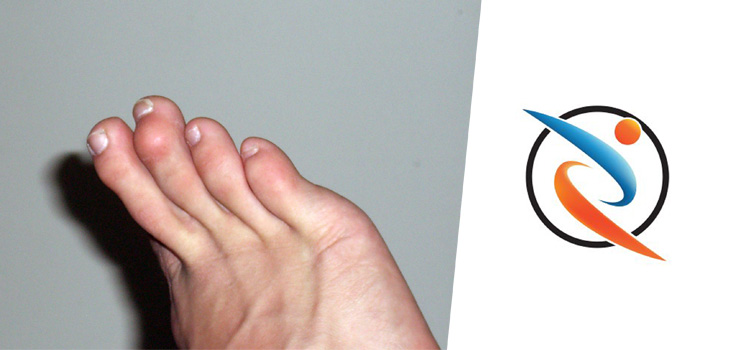
Centric Medical, a division of Life Spine, Inc, has received 510(k) marketing clearance for its Hammertoe Correction System. The device offers a dual threaded design and is inserted between the proximal and middle phalanges, so that the opposing threads fixate on the phalangeal canal of the toe and compress the joint.
Hammertoe Correction System Earns FDA Clearance
1 min read Premium comments
Secondary
The current standard of care for hammertoe correction is to treat patients with wire pins, known as “K-wires.” Many patients complain about the inconveniences that come with the wire pins which can break and dislodge.
Kyle Pearson, M.D., of Rezin Orthopedics and Sports Medicine in Morris, Illinois, said, “Due to the advanced technology in this Hammertoe Correction System, the implant provides maintained correction through stability and compression at the PIPJ (proximal interphalangeal joint), and avoids the complications associated with K-wires.” This innovation, he added, allows the implant to remain within the bone, eliminating the need for the follow up surgery to remove the pins and permanently corrects the pain and deformity of hammertoes.
The Hammertoe Correction System represents the fifth 510(k) clearance for Centric Medical in the past 12 months. The company, which is privately held, is based in Huntley, Illinois.
Author
React:
Discussion
This is a fascinating development. In my practice we've seen similar outcomes with the revised protocol. The key differentiator seems to be patient selection criteria. Has anyone else noticed the correlation with BMI thresholds?
Great point. I'd push back slightly on the conclusion, the sample size in the cited study is too small to draw population-level inferences. That said, the directional signal is compelling and worth a larger RCT.
We implemented a similar approach last year. Early results are promising but we're still gathering 12-month follow-up data. Happy to share our protocol if anyone is interested.
Join the conversation
Orthopedic professionals are discussing this. Sign in and upgrade to read every comment and add your voice.