
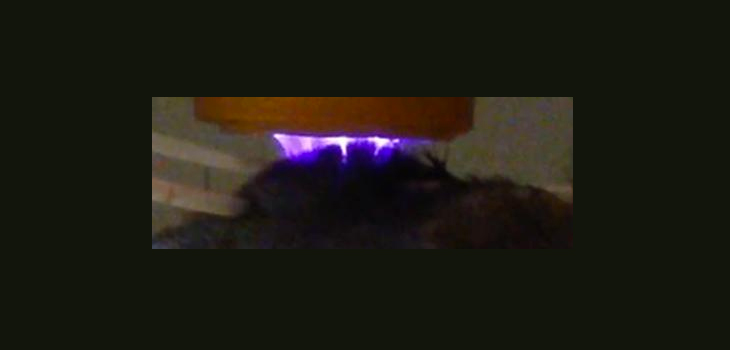
May the force be with your bones…the future is most definitely here. New research has found that cold plasma—the stuff of televisions and fluorescent lights—could actually help bones heal faster. The work was published August 11 in the Journal of Tissue Engineering and Regenerative Medicine.
Cold Plasma Leads to Increased Bone Formation
2 min read Premium comments
Secondary
According to the August 11, 2016 news release, cold plasma has been used in the agricultural realm to sterilize the surface of fruit. More recently, scientists have moved on to experimenting with living animal cells and tissues.
“We’ve previously studied how different applications of cold plasma can either directly kill cells, such as in skin cancer, or help them grow, as in developing bones. In this study, we asked how cold plasma would affect the area surrounding cells, known as the extracellular matrix, ” says lead author Theresa Freeman, Ph.D., in the news release. Dr. Freeman is an associate professor in the Department of Orthopedic Surgery in the Sidney Kimmel Medical College at Thomas Jefferson University in Philadelphia.
“We showed that matrix treated with cold plasma generated using microsecond pulsing can promote differentiation of cells into cartilage and increase bone formation, ” says Dr. Freeman. “Conversely, we showed matrix treated with nanosecond-pulsed cold plasma inhibited cell differentiation and bone formation.”
“As research into medical applications of cold plasma expands, it will be important to study various plasma types and conditions in tissue models, rather than isolated cells, ” says Dr. Freeman, “Because cold plasma affects each cell type and matrix protein to produce variable physiological effects it’s important to study not just how each cell behaves when exposed, but how they react together within the tissue and organismal environment.”
Freeman told OTW, “This follows our previous work where we show plasma treatment can enhance mesenchymal cell differentiation into chondrocytes and osteoblasts and our work on plasma enhanced limb development. In this research, we wanted to know if the plasma directly effects the cells, or if it also affects the matrix surrounding the cells to stimulate changes in cell behavior and physiology that promote differentiation.”
“We were surprised there were significant differences between the two types of plasma, especially the negative effects that the relatively low power nanosecond plasma treatment had on cell behavior and bone formation.”
“Our hope is that the microsecond plasma treatment could be applied at the time of surgery to chemically modify the extracellular matrix to support cell attachment and bone formation and also used to directly stimulate cell differentiation. At the same time, the nanosecond treatment could be applied to inhibit bone formation into other tissue areas. Finally, even though this paper does not describe this, plasma is antimicrobial and so this treatment should also protect the surgical site from infection.”
React:
Discussion
This is a fascinating development. In my practice we've seen similar outcomes with the revised protocol. The key differentiator seems to be patient selection criteria. Has anyone else noticed the correlation with BMI thresholds?
Great point. I'd push back slightly on the conclusion, the sample size in the cited study is too small to draw population-level inferences. That said, the directional signal is compelling and worth a larger RCT.
We implemented a similar approach last year. Early results are promising but we're still gathering 12-month follow-up data. Happy to share our protocol if anyone is interested.
Join the conversation
Orthopedic professionals are discussing this. Sign in and upgrade to read every comment and add your voice.