
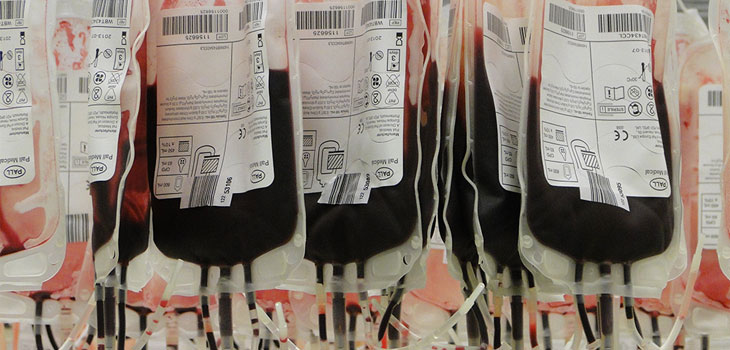
Every drop counts…of blood, that is. And now, a team at Vanderbilt University Medical Center has developed blood use guidelines that saved their facility $2 million and resulted in a 30% reduction in blood utilization.
Vanderbilt Saved $2 Million, Reduced Blood Utilization
2 min read Premium comments
Secondary
“The transfusion committee at Vanderbilt was interested in evaluating how we could implement evidence-based guidelines around restrictive transfusion, ” according to lead study author Barbara J. Martin, M.B.A., R.N.
According to the July 17, 2016 news release, “The first step the team at Vanderbilt took to better utilize blood transfusion practices was to change provider orders to support a single unit and then follow up and order more blood if necessary. The previous standard process was to initially order two units of blood, which is not always needed…”
“The data on restrictive transfusion has been out for years documenting that patients have better outcomes with a more restrictive transfusion strategy. We were looking at whether we could guide providers to treat symptomatic anemia with a single unit of blood rather than the usual two units, ” Martin said.
“By enhancing the Computerized Provider Order Entry (CPOE), the research team allowed for blood ordering practices to be based on a specific assessment of each case rather than a standard order of two units. By revising CPOE, Vanderbilt was able to reduce red blood cell transfusions by more than 30%—from 675 units per 1, 000 discharges in 2011 down to 432 units per 1, 000 discharges in 2015.”
As for blood wastage, the team developed the following guidelines:
- When more than one unit of blood is ordered it is sent in a cooler rather than the pneumatic tube.
- Coolers were reconfigured to optimize temperature management.
- A specific member of the staff is tasked with ‘ownership’ of the blood products, including returning unused product to the blood bank.
- Individual unit wastage is reported to clinical leaders for review, aggregate data are reported monthly.
Barbara Martin told OTW, “This project was triggered by an interest in aligning our clinical practices in administration of blood with best practice recommendations related to restrictive transfusion strategies for patients with symptomatic anemia. The poster presented at the [American College of Surgeons NSQIP] conference highlighted the pleasantly surprising effect of these transfusion triggers on a population that was not a primary focus—patients transfused in the immediate perioperative period. Perioperatively, patients often receive blood for acute blood loss; we did not anticipate the decrease in the NSQIP [National Surgical Quality Improvement Program] patients would mirror the overall institutional decline. We have not evaluated transfusion practices in each service—perhaps that will be the next poster—but the successful implementation of our symptomatic anemia protocol suggests that restrictive transfusion in any population may be considered.”
“With regard to wastage, our primary change was related to delivery processes. Particularly in cases where blood is ordered in anticipation of a need for transfusion, our process for delivery and return to the OR demonstrates how workflows can be developed and maintained when departments work together to achieve a common goal.”
React:
Discussion
This is a fascinating development. In my practice we've seen similar outcomes with the revised protocol. The key differentiator seems to be patient selection criteria. Has anyone else noticed the correlation with BMI thresholds?
Great point. I'd push back slightly on the conclusion, the sample size in the cited study is too small to draw population-level inferences. That said, the directional signal is compelling and worth a larger RCT.
We implemented a similar approach last year. Early results are promising but we're still gathering 12-month follow-up data. Happy to share our protocol if anyone is interested.
Join the conversation
Orthopedic professionals are discussing this. Sign in and upgrade to read every comment and add your voice.